
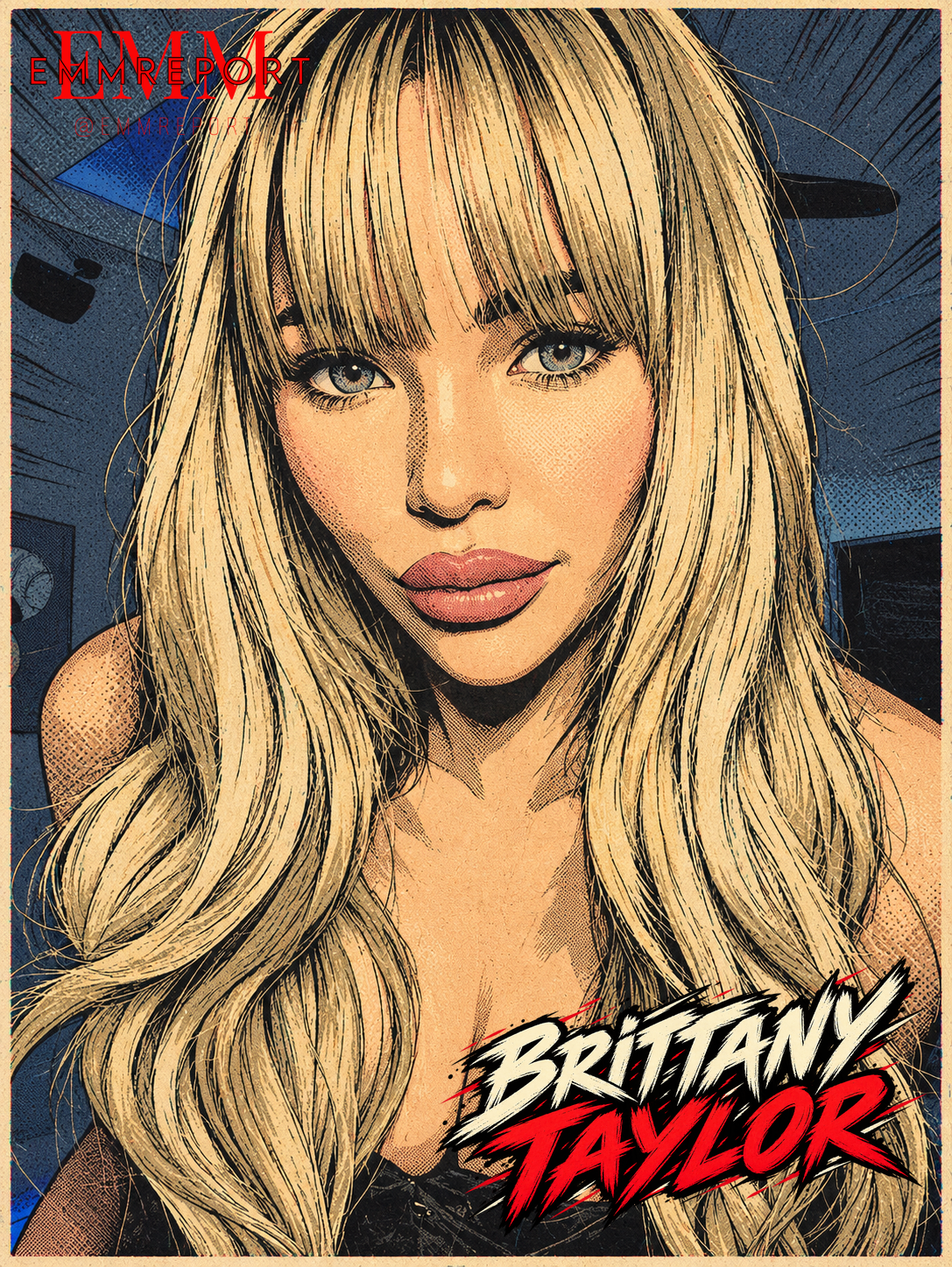
THE SINGER/ACTRESS/MODEL/GO-GO DANCER
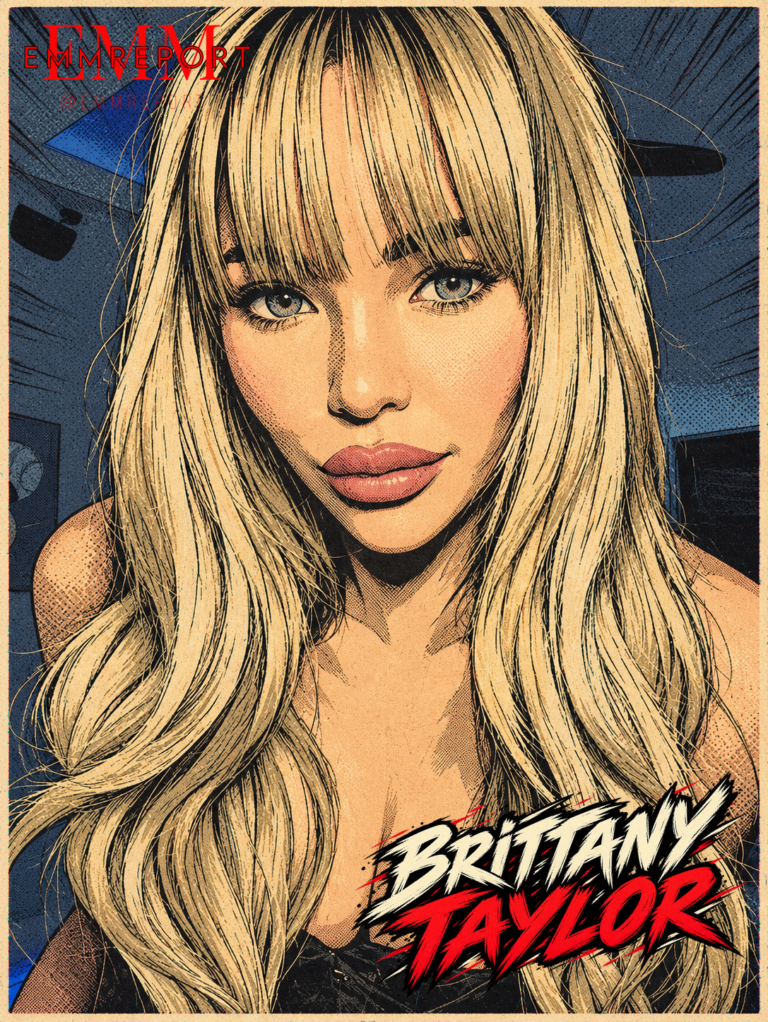
Ahead of her Bar Sinister go-go debut, the international model and actress talks about returning to Los Angeles, turning an older relationship into the single “Pretty Little Psycho,” confronting loss through a new business, and opening her life for the memoir “The Autistic Woman: The Life of Brittany Taylor – Behind the Mask.”
THE DEBUT AT BAR SINISTER
Interview/Feature: Sherman Wayez
CHICAGO, ILL. — Brittany Taylor is preparing to make her Bar Sinister go-go debut this weekend, a featured appearance built around dancing, meeting fans and letting the room see a performer whose career has rarely stayed in one lane. “I’m excited to take on this go-go dancing opportunity,” she says. “This is going to be a fun night. I’m excited to see everyone there. I’m excited to meet everyone. I’m super thrilled for this.”
The word debut applies specifically to this Bar Sinister appearance, not to her first movement under club lights. Taylor has performed burlesque, taken pole classes and go-go danced for the Electric Kittens, but says five or six years have passed since she last did it. That distance makes the invitation feel like a return and a beginning at once: a chance to use skills she already knows while testing them in a different setting.
The invitation came from Kent, whom Taylor knew through SuicideGirls. She describes SuicideGirls as an alternative counterpart to Playboy and says the venue features a SuicideGirl for a go-go appearance each month. Before agreeing, she wanted the boundaries to be clear. “I was like, okay, so it’s not stripping?” she recalls. “He goes, no. He goes, basically, like, dancing and meeting fans, and they tip to meet you. I was like, cool.”
Taylor calls Kent “a very nice guy” who is genuine and understanding about the schedule she is trying to hold together. That schedule is the larger story surrounding the debut: a single and album in progress, an advocacy-centered memoir, a drink brand connected to suicide awareness, a possible documentary or reality series, and modeling assignments that continue to arrive through social media. Bar Sinister is the immediate reason for the conversation. It is also the door into a life she has decided to stop reducing to a polished picture.
THE LIFE BEHIND THE MASK
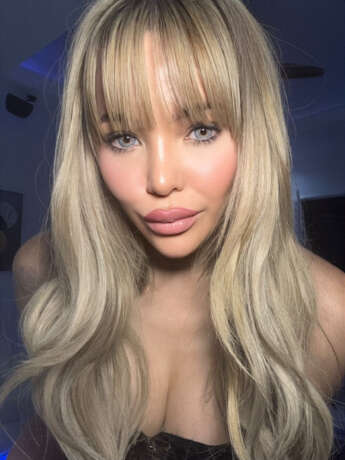
Taylor’s forthcoming memoir is titled “The Autistic Woman: The Life of Brittany Taylor – Behind the Mask.” Authored by Dr. Jose Angel Manaiza Jr., an executive producer, author and professional coach who works with figures in fashion and entertainment, the book centers Taylor’s experiences as a late-diagnosed autistic woman navigating childhood, relationships, mental health and the entertainment business. Its title points to masking: the conscious or unconscious suppression of autistic traits in order to blend into environments built around neurotypical expectations.
In the interview, Taylor used an earlier working title, “The Autistic Female,” but the reason for the project was already settled. “Basically, it’s about me dealing with autism all my life and the awkwardness of it and mental health,” she says, “and as well navigating in the entertainment industry.” She and Manaiza began assembling the project about a year earlier, starting with a written list of major events and then deciding which experiences were necessary to the story.
The process has been useful precisely because it has not been easy. “It has been very therapeutic,” Taylor says. “I got to let out the stuff that I’ve been through as a child and being taken advantage of by people.” Looking back also changed the meaning of some memories: “It really did kind of change my outlook on things too and gave me a whole new perspective.”
Some of what she recorded still frightens her. Taylor says there are personal events she is scared to let people know, but she believes disclosure can help other women recognize parts of their own lives. The memoir extends the neurodiversity advocacy she and Manaiza have pursued through fashion, representation and public conversations. It also shares that work with the person who lived it: a woman learning to distinguish the face that survived a room from the self she had been protecting inside it.
DIFFERENT BEFORE SHE HAD A WORD FOR IT
Taylor grew up in a small town and remembers being bullied because she seemed different. She also sensed jealousy around her appearance and later success, particularly when people who did not know her began inventing explanations for how she survived or advanced. “They like to put their own two cents in and assume that, oh, she must be doing this to survive, she must be doing that,” she says. “They don’t really know you, and that’s the sad part.”
She attended public elementary school, then private middle and high schools. History and English were her favorite subjects because she loved to write; music appreciation mattered just as much. The pattern was already visible: story, performance and the need to understand the world behind what people appeared to be.
THE POP STAR HIDING INSIDE THE MODEL
Modeling began early enough that Taylor could imagine it as the obvious future. Musical theater gave her another possibility. The private ambition, however, was pop music. She danced to Britney Spears, Christina Aguilera, Kesha and Ashlee Simpson, but says the attraction was not simply attention. “I like to write a song because it tells a story,” she says. “When I’ve listened to music, I’ve always listened to lyrics and not the singer singing, because it’s going to tell you a story.”
Her high-school self did not look like a predictable future fashion figure. Taylor describes herself as “kind of like a nerd, but like the emo girl on the cheer team,” with dark hair and pink highlights. The cheer uniform, alternative styling and private pop-star dream were not competing identities so much as an early version of the career she would eventually build: conventional and rebellious at the same time.
SISTERS ON THE RUNWAY
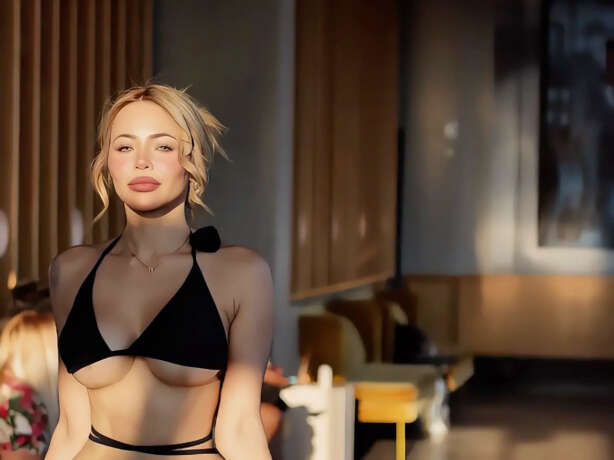
Taylor’s mother placed her and her sister in modeling when Taylor was about seven. The sisters appeared together in runway shows and bookings that Taylor recalls for Toys “R” Us, Caché, For the Bride and JCPenney. At that age, modeling felt like dress-up until the clothes stopped being fun. She remembers crying backstage over an outfit she hated and her mother using pizza as leverage to get her onto the runway. The strategy worked so well that Taylor now jokes the lasting punishment is that she no longer eats pizza.
Acting grew alongside the runway. Taylor played Annie in a musical, then joined her sister as two of the younger sisters in “Fiddler on the Roof.” “Narnia” followed, along with years of musical theater through high school. She did not discover production as an adult looking for a new career. She grew up inside it.
THE LOSS THAT STOPPED EVERYTHING
When Taylor and her sister were about 16, her sister died by suicide. Taylor says she gave up modeling and acting and spent years depressed, working an ordinary bar job after a childhood built around stages and shoots. The loss does not sit at the edge of her current projects. It runs through the memoir, the drink brand she is developing and her determination to speak openly about mental health.
Taylor also speaks carefully but directly about her own periods of suicidal crisis. She frames that history through what families live with afterward and through a desire to direct support toward suicide awareness. The work is not an attempt to convert grief into a slogan. It is a way to build something useful around an absence that never became simple.

THE BAR JOB THAT REOPENED LOS ANGELES
The path back began unexpectedly. Taylor was working at a bar after leaving an abusive relationship when the lead singer of Pop Evil, a band her former partner liked, came in, told her she should model and offered to connect her with people in Los Angeles. Taylor had no Instagram account and only a presence on Musical.ly, the platform that became TikTok. “I just work at this bar,” she remembers saying. “I don’t know anybody.”
She went anyway. A friend she identifies as Lee, whom she describes as being like a brother, helped introduce her to people and warned her about others. Content houses helped build her following, and modeling jobs followed. Taylor first leaned into sexier work because the strategy built a male audience quickly; later, her following became more female and her assignments moved back toward fashion.
PLAYBOY WITHOUT THE ASSUMPTION
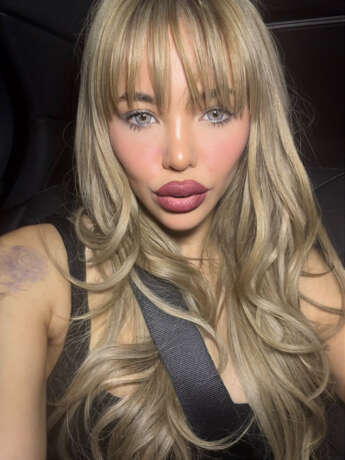
Taylor lists Playboy, Maxim Australia, Maxim USA and FHM USA among the publications and markets that accelerated her profile, followed by fashion work she identifies in the interview as Mobier, Glamour and Vogue. She also describes receiving Playboy-related “Playmate of the Decade” recognition. The assumption that mattered most to correct was about the image itself: “For my Playboy cover, I actually was not nude,” she says. “I was on top of it.” The cover came from the bikini era, and she takes visible pleasure in disrupting the easy conclusion people draw from the name.
THE MAN WHO KNEW HER AT SIXTEEN
Taylor distinguishes the person who helped her find Los Angeles connections from an older man she first knew when she was 16. After her sister’s death, she met the man through her family’s bar. Contact faded, then resumed years later after a chance encounter in Los Angeles. They moved through an on-and-off relationship for roughly six years after reconnecting.
With distance, Taylor sees manipulation that she could not identify while living inside it. “I feel like I was taken advantage of in that relationship in ways because I was younger,” she says. She describes being treated as a “pretty little side piece,” molded and controlled, and says the situation worsened after a proposal. The details matter to the memoir and to the music because they show the same conflict from two directions: the relationship as lived history and the relationship converted into a voice she controls.
NASHVILLE, THERAPY AND THE RETURN TO LOS ANGELES
During four years with her former partner, Taylor lived with him in Nashville after he made clear that he did not want Los Angeles. She says she followed his preferences and lost focus on her own work. By the time of the interview, she had returned to Los Angeles about six months earlier. The move felt less like chasing an old fantasy than reclaiming the momentum she had set aside.
Therapy changed the speed with which she reacts to pressure. “Now I can spot when something’s not right and trying to manipulate me, or someone’s trying to steer me off the wrong way,” she says. “I cut them off really quick.” She points to a brief rebound relationship she ended after recognizing disruption. “Now I have standards,” she says. “I’m focused on my work. If you disrupt my peace or my work, you’re out.”
Taylor does not romanticize Los Angeles. She sees the flakiness clearly and still believes a person can make a path there. Music is the deciding factor. “Los Angeles is good for music,” she says, and music is where the childhood ambition has finally become present-tense work.
PRETTY LITTLE PSYCHO
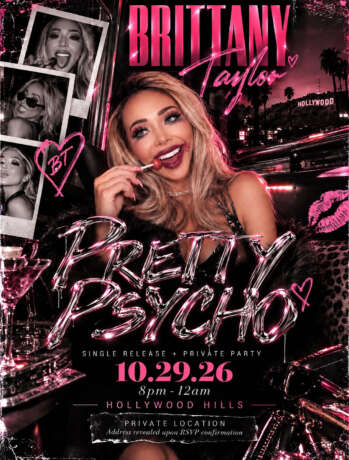
Taylor wrote “Pretty Little Psycho” from the emotional architecture of the older relationship. The song follows a younger woman shaped into someone else’s preferred image, underestimated as naive, wounded by the control and eventually strong enough to leave. “He dressed me up, thought I was naive, but dressed me up to watch me bleed,” Taylor says of the idea. “He didn’t want her to overpower him. And then she breaks free finally.”
The title plays with the way independence is often reframed as instability. Taylor built the song over five days, beginning with a chorus and adding pieces of her own experience. “Call me obsessed, call me crazy, but you built this hell,” she says, paraphrasing its confrontation. Other lines turn accusation into affirmation: “Mirror, mirror on the wall, who’s the baddest bitch of all?” and “Pretty girls don’t cry. We make boys die inside.”
At the time of the interview, the plan was a Los Angeles release party on the 29th followed by a midnight release on the 30th across major streaming services, including Apple Music and Spotify, with radio and DJ-pool support. “I’m excited to get my song out there,” she says.
AN ALBUM AFTER THE SINGLE
“Pretty Little Psycho” is not intended as a one-song experiment. Taylor says she is building an entire album and already has four additional songs taking shape. She mentions a twist on “Girls Just Want to Have Fun” and another track called “Getaway Driver.” The exact sounds remain in development, but the governing idea is consistent: bright pop surfaces carrying personal stories that are sharper underneath.
EXPRESSI AND THE PEOPLE LEFT BEHIND
Taylor is also developing Expressi, a canned espresso-martini brand she began with her younger sister and a friend. The business idea came from a simple gap she noticed: espresso martinis were popular but difficult to find at a dive bar, and many canned versions carried an alcohol percentage that made bar service less practical. She imagined a small pink can that could work in bars and convenience stores.
The purpose expanded when Taylor decided that a portion of the proceeds should support suicide awareness. “My sister died from suicide,” she says. “I know other people, and it’s like, I want to give back to the families because I know the devastation that comes after it.” Plans at the time called for samples at the music-release party and a broader launch by the holidays. People were already asking about it, she says, and the visual identity—the “adorable” pink can—fit naturally into the world she was building.
REAL PEOPLE IN THE AGE OF AI
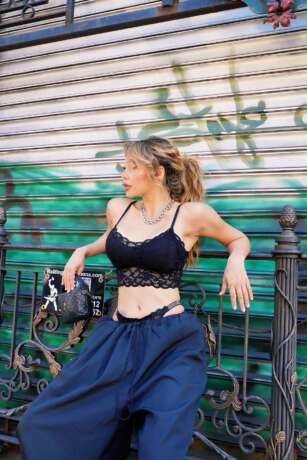
Artificial intelligence has changed the atmosphere around modeling, but Taylor believes it has increased the value of visible reality. “People want to see the real thing,” she says. “They don’t really want to see AI.” She reads the growing importance of video on TikTok and Instagram as a form of proof: moving images give audiences more confidence that the person, body and work they are seeing actually exist.
MAKING IT IN LA — WITHOUT EDITING OUT THE PAIN
Taylor is developing an upcoming reality project, “Making It in LA,” with model Matilda Dahlin. The project is intended to highlight the lived experiences of autistic women and parents of neurodivergent children, extending the advocacy behind the memoir into an observational format. Taylor and Manaiza’s broader fashion collaborations likewise use visibility to push neurodiversity awareness, acceptance and representation into spaces that have often rewarded polished conformity.
In the interview, Taylor also mentions an upcoming appearance she refers to as “Billboard Zinc” and says she has begun filming behind-the-scenes footage that could become a documentary or reality series. The material would follow workdays, studio sessions and shoots rather than simply collecting red-carpet outcomes. The value, she says, is the difference between the feed and the life underneath it.
“Social media is like a front—everything’s good, everything’s great,” Taylor says. “But in my personal life, deep down, the hurt and the pain, I think they’re going to see more raw footage and realize that, oh, she’s a person.” She wants viewers to see the repetition, labor and emotional residue behind images that arrive looking effortless.
THE WORK BEHIND THE IMAGE
Taylor believes people misunderstand how much entertainment now requires performers to build before a company becomes interested. “They think, oh, you just get signed and they get you anywhere and anyone can do it,” she says. “But nowadays with the streaming services and stuff like that, you have to basically make the product, put it out there, edit it and everything for a studio for them to pick it up.”
Followers matter, but she says raw audience size is not enough. Brands and productions examine performance statistics as well. The distinction between modeling and television is equally practical. Taylor can complete a familiar photo shoot in about an hour because she works quickly and often knows the photographers; hair and makeup may take longer than the camera portion. Television keeps filming until it has the right moments, with no comparable shortcut. “There’s no days off,” she says. “You constantly have to film, film, film.”
VON DUTCH AND THE ALTERNATIVE EYE
On the day of the interview, Taylor had worked on a Von Dutch shoot with the brand’s own content creator and photographers. Brands may choose the production team, she explains, even when she maintains relationships with photographers she trusts. The assignment arrived through social media and aligned naturally with her tastes. She points to a cheetah-print hat and says, “This is more like my style. I do a lot of alternative stuff. I love animal prints.”
The comment brings the career back to the emo cheerleader with pink streaks. Taylor can work inside a brand’s system without disappearing into it. The alternative eye was present before the follower count, before Los Angeles and before she understood why being different made certain rooms difficult.
STRONGER THAN SHE THOUGHT
Asked what surprises her most about the life she is recording, Taylor does not name a cover, a campaign or a platform. “I would say that I’m stronger than I think I am,” she says. “There’s parts where I wanted to give up in my life. I can’t believe how far I’ve come.” Survival is not the only story she wants to tell, but it is the condition that allowed every other project to exist.
The younger Taylor, she believes, would have been sweeter and carried less pain. She would also be proud. The message Taylor gives her audience grows from that recognition: “No matter what, people are going to call you crazy. My family literally called me crazy for moving out here, and it’s going to take hard work, it’s going to take struggle, but always fight for your dreams.”
Taylor identifies herself as @IAmBrittanyTaylor on TikTok and Instagram. She believes people often call someone crazy because they are too afraid to make the same leap themselves. At Bar Sinister, the leap is measured in music, movement and a room full of people she is ready to meet. Beyond it are a book about the self she once concealed, a song about the control she escaped and a future she is no longer asking anyone else to authorize.
@IAmBrittanyTaylor on TikTok and Instagram
www.iambrittanytaylor.com

Follow us on twitter: @emmreport, instagram @emmreport, tiktok@emmreport




+ There are no comments
Add yours