
From manga and cosplay to gravure, wrestling, independent publishing and an intimate Seiraku Toys collaboration, the Japanese performer traces a career built around making things on her own terms.
- A BODY, A BOUNDARY, AND AN UNUSUAL COLLABORATION
- Interview/Feature: Sherman Wayez
- CHICAGO, ILL. — Luna Amemiya has spent much of her public career drawing a line between suggestion and exposure. The Japanese gravure model, cosplayer and professional wrestler built a following in a field where glamour can be provocative without becoming explicit. For a new collaboration with Seiraku Toys, she agreed to let a version of her body cross a boundary she has maintained in person. That distinction is central to the project—and to the way she talks about control over her image.
“I thought it would be interesting to show them through an opportunity like this,” Amemiya says, explaining why the torso reproduction includes details she does not ordinarily reveal herself. Her boundary remains intact: she does not intend to reveal her breasts publicly in the same way. The object, rather than the performer, is what viewers will see.
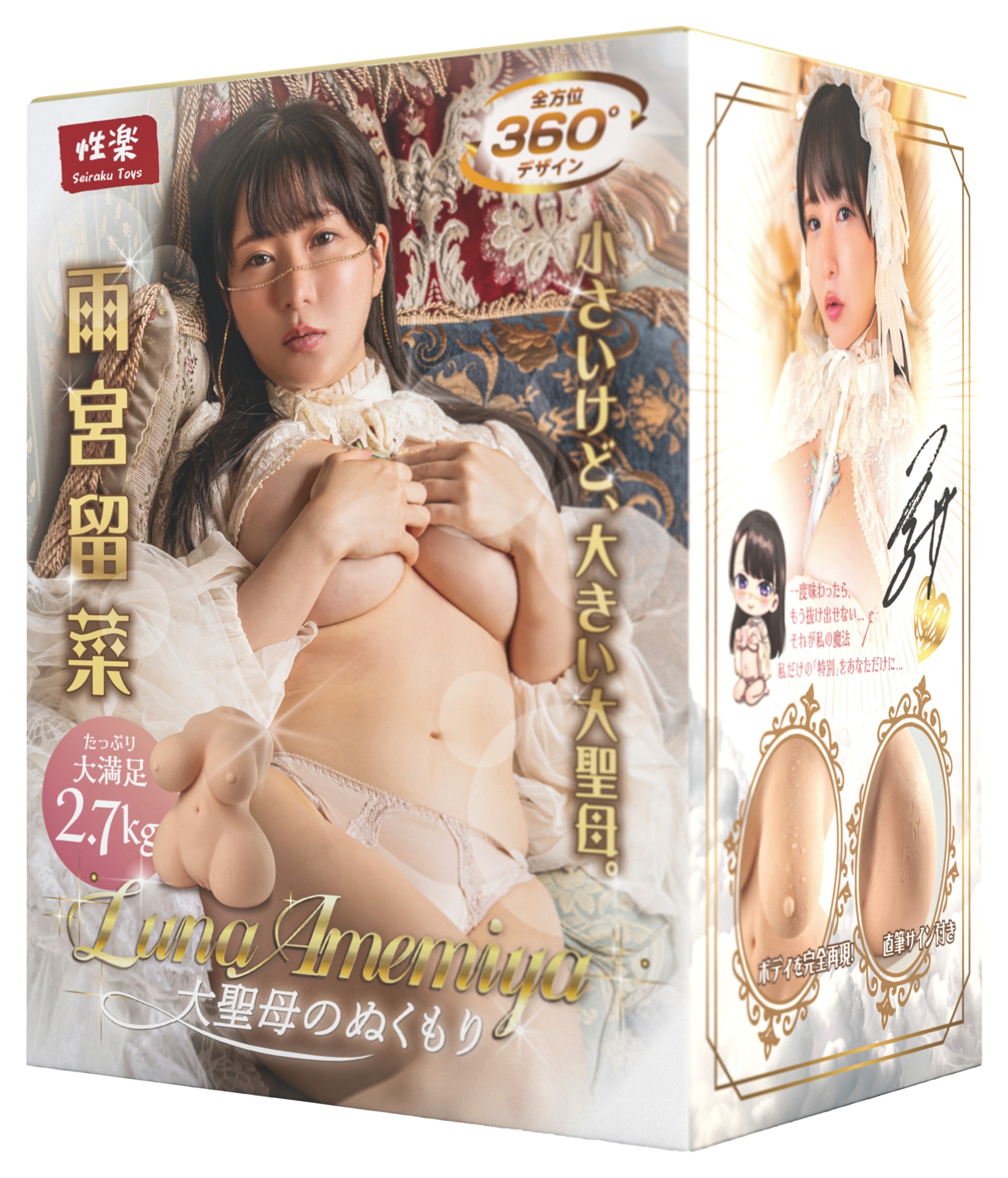
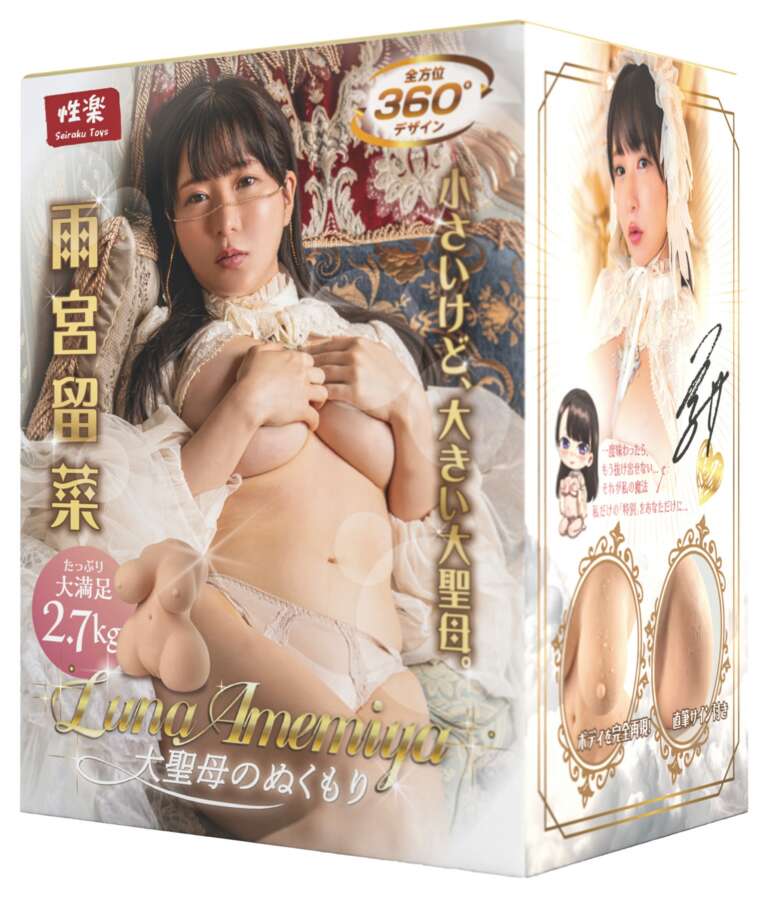
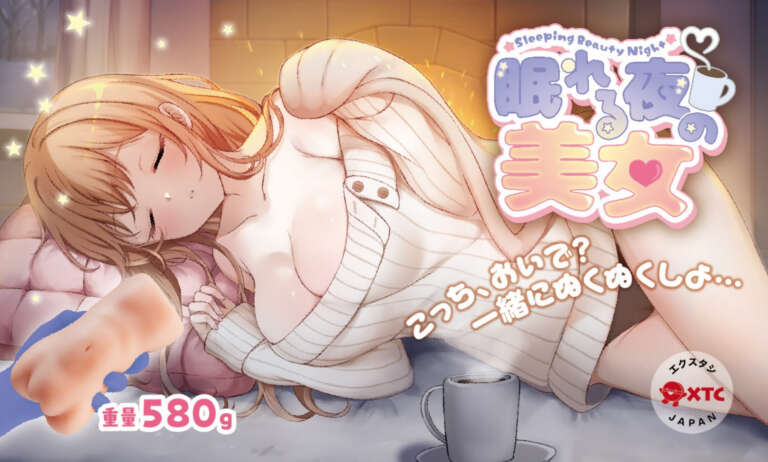
The resulting product is called “Luna Amemiya: Holy Mother’s Embrace.” The company describes it as a reproduction of her proportions in dual-layer TPE, with details based on her customized anatomy. According to the supplied product information, it launched in June 2026. Its significance, however, is better understood by listening to Amemiya explain how she came to the project, what she chose to show and how she built a career making choices for herself.
She says the company approached her with the idea. What came next was not a quick branding exercise but a long process involving photographs, physical detail work and prolonged development. - Amemiya refuses to turn the collaboration into a confession. She does not describe years of frustration at the limits of gravure, or a sudden need to shock the public. The reproduction offered an unusual opportunity to do something she would not ordinarily do. The boundary survives the exception. A manufactured likeness can be displayed; she still makes the decisions about her own public appearance.
“They approached me about it. It was more like being scouted for the project.”
“I’m never going to show my breasts myself.”
“I thought it might be interesting to show them through an opportunity like this.” - THE YEAR IT TOOK TO MAKE THE TORSO
Amemiya did not set out to commission a replica of herself. The approach came from the company, which invited her to participate. What followed, she recalls, involved photography, providing measurements and taking impressions of selected detailed areas. She remembers the waiting as clearly as the procedures. “It took so long,” she says. “Probably about a year—maybe more.” The contrast with an ordinary photo shoot is considerable. A photograph is captured in a moment; this collaboration required an object to be developed long after the camera was put away.
The company supplies the engineering particulars. The finished torso is described as 25 centimeters tall and 2.7 kilograms, made with super-premium dual-layer TPE. Its internal design is presented as a 14-centimeter, four-zone recreation. The retail notes place the U.S. price at $129.95 and say each unit bears her handwritten signature stamp and includes a signed postcard. These are manufacturer-supplied specifications, distinct from Amemiya’s account of making the replica.
According to Seiraku Toys, the project is its first reproduction of her breasts without the censorship that ordinarily accompanies her public imagery. Amemiya sees the unusual representation as an interesting exception, not as a sign that she is surrendering the right to decide what she shows on camera.
She is open to the possibility of another body-based reproduction as her appearance changes with age. A separate, larger, approximately six-kilogram product was also described as forthcoming, distinct from the available 2.7-kilogram torso; no release date or final specifications were established for that larger project.
The choice is especially distinctive because the product is neither a conventional endorsement nor an ordinary portrait. Seiraku Toys says the design reproduces proportions and anatomy, including features that make this particular collaboration different from a generic model. Those are the manufacturer’s claims, and Amemiya’s own explanation is narrower and more human: she was approached, participated in the lengthy making process, and found the unusual result interesting.
The company says the product bears a reproduction of her handwritten signature and comes with a signed postcard. It is distributed in the United States through Onahole.com and in Europe through MotsuToys.com. These retail details explain how the collaboration reaches fans abroad; they do not explain why Amemiya chose it. That answer belongs to her long-standing habit of pursuing projects on terms that make sense to her.
“We took photographs and sent them over.”
“We made casts of some of the more detailed parts.”
“It took a really long time. Probably about a year. Maybe even longer.” - THE GIRL WHO WAS DRAWING MANGA
Well before the product and the modeling career, Amemiya was making manga. Her route into public-facing performance began not with a plan to be a professional model, but with drawing, making fan work and attending events associated with Japan’s self-publishing and comic culture. She dressed as anime characters to help bring that work to life. Photograph sessions and cosplay events followed. “I started cosplay at fourteen,” she says. She recalls participating in photo sessions and producing her own photo books for events. Rather than describing a single dramatic discovery, her history is a progression: making art, wearing costumes, being photographed, meeting an audience and finding that one activity led naturally to the next.
Amemiya never imagined modeling as an inevitable destination. Her self-image as a girl was unconventional; as she puts it, “I thought of myself as a boy.” The memory sits awkwardly beside the polished fantasy image the public later came to know, which is precisely why it matters. She was interested in what she could make and do before she was interested in becoming anyone’s visual ideal.
Her creative origin matters because modeling was not the first medium she encountered. The drawings came before the camera. At fan events she was already learning how an audience finds independent work and how a creator puts something finished into other people’s hands. Cosplay made another kind of sense in that environment: the character she had admired in illustration could become an outfit, a pose, a photograph. Her family did not appear to oppose these early experiments, and she has indicated that her parents are proud of her work.
It would be tempting to retell the transition as a discovery of celebrity at fourteen. Amemiya offers a more practical sequence. The costume play began at fourteen; photo-session modeling followed in her teens; the gravure DVD came later. The steps were related but not identical, and none requires turning the girl drawing manga into someone who had always dreamed of magazine covers.
“I wasn’t really thinking about becoming a model.”
“I thought of myself as a boy.”
“I was drawing manga and taking my own work to places like Comic Market.”
“I started cosplaying anime characters, and that led to taking part in photo sessions.”

FROM COSPLAY TO GRAVURE
Amemiya dates her early photo-session modeling to around sixteen and her first gravure DVD to eighteen, after beginning cosplay at fourteen. Those activities overlapped with school rather than replacing it overnight. Cosplay alone offered no dependable income; paid modeling brought new demands as well as enjoyment. Her earliest work was more difficult than she expected, but she found pleasure in learning it. By her later school years she had begun appearing on television, surprising some classmates who had known her simply as a fellow student.
Gravure is easily misunderstood outside Japan. It is a form of glamour performance built around swimwear, lingerie, modeling, magazines, photo books and DVDs rather than explicit adult films. Amemiya is specific about the difference. Her videos often present staged scenes of leisure or romantic play—on a beach or in a bedroom—constructed for the viewer’s imagination, not scripted feature films.
Amemiya has also worked on action and genre productions, including spy and zombie material. Those productions belong to a different part of her résumé from her gravure DVDs, which create suggestive situations without telling a conventional dramatic story.
She first encountered gravure idols in elementary school, when they appeared on television and on the covers of Japanese manga magazines. An early favorite was Aki Hoshino, whose striking contrast of a slight figure and full bust impressed her. The young manga artist was already absorbing an important part of the culture around her: the illustrated stories and the real women on the covers inhabited the same magazine, and both invited a reader to imagine a character.
In Japan, she explains, gravure models were hardly obscure figures hidden in a niche. They appeared on mainstream television, while manga magazines put the women on their front covers. A girl looking at comics could discover that modeling world almost incidentally. Amemiya remembers those images vividly enough to identify a performer she admired years later.
A gravure video is not necessarily a film with a dramatic story in the conventional sense. The viewer might see a woman enjoying the beach or sharing a playful moment in a bedroom; the camera constructs the suggestion of intimacy without an explicit sex scene. To Amemiya, those videos are familiar tools of her profession, a distinct form of performance with its own conventions.
“I started cosplay when I was fourteen.”
“I was doing photo-session modeling at about sixteen.”
“I released a gravure DVD when I was eighteen.”
“I think I first knew about gravure idols when I was in elementary school. They were on television in Japan, and gravure idols were on the covers of manga magazines.”
- FINDING A FORM OF GLAMOUR THAT FITS
Gravure appealed to Amemiya more than conventional fashion modeling or explicit adult-film work because she enjoys carefully composed, attractive imagery and the visual play it permits. She has not done much straightforward fashion-brand modeling.
The best thing about gravure, in her view, is that it takes something from both ordinary-age-rated glamour and adult-oriented presentation. Its disadvantages do not trouble her enough to inspire a list of grievances: “Nothing in particular. I don’t do things I don’t want to do.” That matter-of-fact response reflects the limits she sets for herself.
Her view of her own image is straightforward. The audience may imagine a complicated private personality behind the photographs, but she does not go out of her way to hide who she is. Everyday behavior, even a habit such as smoking, is not something she feels obliged to disguise to protect a spotless fictional persona.
Her refusal to treat personal limits as professional disadvantages is revealingly brisk. “I don’t do things I don’t want to do,” she says. Instead of accepting the premise that a career in suggestive imagery must involve continual regret, she locates the choice with herself. She likes the freedom to work within a glamorous, adult-adjacent field without treating every possible form of exposure as a natural next step.
That distinction matters in the collaboration at the center of her career today. If she sees gravure as its own medium rather than a holding pattern before more explicit work, allowing an unusually detailed replica does not automatically signal a change of careers. She is making a separate decision about a separate project.
“Aki Hoshino was the one I admired. She was very slender, but she had a large bust.”
“I already had a fairly large bust back then, but hers was on a completely different level.”
“I think the best thing is getting the good parts of both all-ages glamour and adult-oriented work.”
“I haven’t really done fashion modeling for famous brands.” - ON HER OWN TERMS
That sense of agency is clearest in her dealings with photographers who request more provocative poses or nudity beyond an agreed shoot. Such requests do arise, she acknowledges, but the terms of the work are established by contract and professional limits. A photographer who pushed beyond what had been agreed would face objections from both her and her agency.
The issue is not simply the physical boundary established by her gravure work. It is about who decides. Her willingness to allow a replica of details she does not show in person is a creative opportunity rather than a wholesale reversal of the rules by which she works.
Her preference for control also shapes her response to assumptions that she must have been exploited because of her small stature. Experiences have helped shape her forthright personality, but she rejects the role of a tragic heroine. She dislikes being spoken about as someone who ought to be pitied.
A photographer who demanded more exposure than she had agreed to provide would not have the final word. Amemiya points to contracts and to her agency. A request outside the arrangement is not a creative instruction she must obey. Both she and the people representing her would object.
She also resists the idea that a small woman with a prominent bust must have spent her life being exploited. She does not deny having learned from difficult people or circumstances, but she dislikes the insistence that she occupy the part of a pitiable heroine. She would rather be understood as the woman she is than a character somebody else has written for her.
“There are requests for provocative poses.”
“If a photographer demanded nudity or something more extreme than the limits I had set, my agency would be angry with them, and so would I.”
“We have proper contracts.”
“There isn’t anything in particular that I dislike. I don’t do things I don’t want to do.” - A SMALL FRAME IS NOT THE WHOLE STORY
Amemiya does not regard being petite as an uncomplicated professional advantage or disadvantage. “There are good things and bad things,” she says. “But that can be said of everything. It isn’t that being short is bad.” Her answer refuses a simple narrative in which one physical characteristic explains her career.
Amemiya firmly rejects the assumption that her bust made her a target for bullying: “Not at all. I’ve been loved.” Her school years included ordinary friendships and a sense of independence that do not fit a story of relentless persecution.
She attended a technical high school with only a handful of girls—approximately three or four, by her account. Her interests included physical education and spending time with friends. Neither her small stature nor the attention paid to her appearance tells the whole story of the student she was.
“There are good things and bad things.”
“But you could say that about anything. It doesn’t mean being short is bad.”
“You may be asking because you want me to be someone to feel sorry for—a tragic heroine. I don’t like that.”
“Was I bullied because of my bust? Not at all. I’ve been loved.” - THE WORK BEYOND THE POSE
To Amemiya, being photographed is only one visible part of the job. She talks with affection about choosing outfits, making photo books and preparing for events. “I even do the steady work of buying costumes and making photo books myself,” she says. “That’s exciting too.”
Her photo books are a continuing independent publishing business, not an occasional souvenir of a shoot. She handles their creation herself and sells them at fan events and through a web shop. Events were described as occurring roughly every two or three months, with several books prepared for each gathering. Her involvement extends from the photographs to the design and preparation of the finished volumes; every book represents a collection of choices made long before anyone sees the cover.
The rewards of her work are not limited to money or recognition. She enjoys making things that please other people and make her happy as well. Sharing her activities online is part of that relationship: she wants people to see what she has been making and doing, without pretending that her public image and ordinary personality are two unrelated people.
The hidden production work has its own satisfactions. There are clothes to choose, photographs to select, books to lay out and events to prepare for. “That’s exciting too,” she says. It is not a throwaway comment. It suggests that the delight lies as much in constructing the finished presentation as in standing in front of the lens.
This is the career that began with manga, not a completely new identity invented by a modeling agency. The girl who created fan art and attended comic events became an adult who still makes printed things for people who come to see her. The format changed; the desire to make something and share it with an audience did not.
“I was going to events where I made my own photo books.”
“I buy costumes and make photo books myself. I do that kind of steady, behind-the-scenes work.”
“That part is exciting to me, too.” - WHEN THE CAMERA MOVES
Amemiya has appeared on television and in variety programming, including segments connected with billiards, mahjong and gravure performers. She has also done action-oriented films. Those projects broadened her work without displacing modeling as its center.
She sometimes watches her own recorded work to check how it turned out and assess what should be corrected. The work therefore continues after the shooting: there is an image to review, a presentation to refine and a professional standard to maintain.
She sees much of her work as connected across media: whether an image is still or moving, she is presenting something to an audience. The visual image remains her primary language.
“I’ve done some variety shows, and programs where gravure idols are all having fun together.”
“I can play a little billiards. I’ve also done things involving mahjong.”
“When I talk about videos, I often mean gravure DVDs: scenes like playing on a beach or being affectionate on a bed, imagining that kind of situation with the viewer.”
“I have appeared in films too—spy stories, zombie stories, and different kinds of action projects—but that isn’t my main work.” - A DIFFERENT KIND OF PERFORMANCE: PRO WRESTLING
One of the more unexpected branches of Amemiya’s career is professional wrestling. She remembers her first match as one against a friend from the same agency, a fellow performer with whom she remains close. She names a Shining Wizard as a favored finishing move, describing a running knee-based strike against an opponent rising into position.
She remembers every wrestling match with affection. “I love all of them,” she says, although a championship-belt match against a particularly strong senior opponent stands out in her memory. She does not single out any opponent as someone she dislikes.
Her wrestling career grew after she attended an event and became interested in participating herself. She continues to appear in matches, but gravure remains her main career. Moving to a much larger organization such as WWE would require shifting that balance in a way she does not want.
“If I pursued that more seriously, it might sound as though what I do now is just playing around,” she says. Her point is not to dismiss wrestling. It is to protect the combination of work that suits her rather than rearrange her entire life around one discipline.
Her Shining Wizard is a particularly vivid part of her wrestling repertoire. As an opponent rises, she steps in and delivers the strike around the neck and jaw area. The detail makes clear that she remembers matches through actions, not simply costumes or publicity photographs.
One championship match against a strong senior wrestler stands out because the stakes were larger and the opponent formidable. Still, she is reluctant to elevate one rival by dismissing another. “I love all of them,” she says about her matches. She has no opponent she dislikes. Competition has not become a reason to invent a feud.
A much bigger wrestling platform would require her to reconsider the balance of her career. For now, the answer is no. Gravure is the center of her work. She enjoys wrestling and takes it seriously, but reorganizing everything around a major international promotion would mean giving up the combination of work she has deliberately assembled.
“My first match was with a friend of mine from the same agency. We’re still close.”
“My finishing move was the Shining Wizard. When the opponent is getting up, you step onto the knee and kick between the neck and the jaw.”
“I like all my matches, but the match for a major belt against a very strong senior wrestler was memorable.”
“I like everybody. There isn’t an opponent I dislike.”
“Gravure is what I mainly want to do. I like the way my work is balanced now.” - THE AUDIENCE ON THE OTHER SIDE
Amemiya estimates that men account for roughly seventy to eighty percent of her fans. She points particularly to men in their forties and women in their twenties. This is her own informal characterization, not independently audited demographic data.
Her audience is not entirely domestic. She says she wants to meet more of the people who follow her online and travel to additional countries. Recalling an encounter with someone she admired, she recognizes what fans might feel when they finally meet a person they have known only through images and screens.
Being recognized in public does not seem to trouble her, and fame has not fundamentally transformed her relationships. “My friendships and romantic relationships haven’t changed much,” she says; her love life, she notes, has not been entirely secret.
She offers a specific, if informal, picture of the people on the other end: roughly seven or eight in ten fans are men, often in their forties, and she also notices women in their twenties. Those are not marketing statistics assembled by an analyst; they are the kinds of faces and messages she has encountered in her own career.
A meeting with someone she admired taught her something about that audience. She describes the peculiar feeling of seeing a person in real life after knowing the person through media. It made her think about the fans who support her from afar without attending an event. She would like to go to more countries and meet them in person. Recognition is part of the business, but the people behind it remain interesting to her.
“It’s mostly men in their forties and women in their twenties.”
“Men are about seventy or eighty percent of my fans.”
“My friendships and my romantic relationships haven’t changed that much.”
“There are people who support me online but don’t come to events. I thought about what meeting me might feel like for them.”
“I want people to come and meet me, and I want to go to lots of different countries to meet them.”
- THE STRANGE MESSAGES FAME CAN BRING
The international audience has produced some odd encounters. Amemiya recalls receiving an Instagram approach from a highly followed American celebrity or public figure. The person had millions of followers, she says, and the invitation startled her; she wonders whether it was an attempt to recruit her as a mistress. She does not identify the person, and their identity remains unknown.
The most routine parts of that business can also be the most demanding. Alongside subscription and custom-content work, Amemiya has maintained a YouTube presence, though activity there had slowed. She was considering renewed video activity connected with OnlyFans TV; no completed launch was established. Custom-video orders were described as frequent, sometimes arriving daily. That suggests a regular workload, not necessarily same-day delivery or a fixed monthly total. Viewers seek material made specifically for them rather than an anonymous mass audience.
One memorable commission involved an English-language script of approximately fifteen minutes, an unusually elaborate assignment. A viewer may see only a single personalized video, while the creator must interpret, rehearse and execute somebody else’s detailed request.
One request stands out not because it demanded something especially shocking on camera but because of its preparation. A customer supplied a detailed English-language script for a personalized video of about fifteen minutes. Amemiya remembers the complexity. For the person ordering it, the result might be a single video. For the performer, it means interpreting a written assignment and making someone else’s imagined scene work.
Her custom-content business returns to skills she developed through manga and cosplay: interpreting a character, deciding what to make, then turning an idea into an image. It is a different economy from gravure DVDs, but satisfying an audience without giving up creative control remains a familiar challenge.
“I was surprised when someone from America contacted me on Instagram.”
“That person had an enormous number of followers—millions.”
“I wondered if it was an invitation to become a mistress.” 
- THE LIMITS OF A LABEL
Japan’s gravure category does not map neatly onto American distinctions between glamour, Playboy-style nudity and explicit adult films. Amemiya works with suggestive imagery but has declined offers to move into explicit films. She prefers the form of modeling she has chosen.
Amemiya is interested in where gravure belongs within broader adult-oriented culture, but does not believe its performers must follow the same career path as other models. An appearance in Playboy without nude modeling is among her aspirations. She has sought opportunities through applications, without treating exposure beyond her limits as the price of entry.
The American glamour market offers potential opportunities but also different expectations about nudity. Amemiya has explored a Playboy-associated platform, although the precise arrangement is not established. Her larger position is clear: reaching new audiences should not require changing the boundaries of the work she has chosen.
For many gravure fans, part of the attraction is the suggestion of an untouched, almost idealized figure. The idea of a “virgin” image belongs to the conventions of fantasy presentation; it is not a claim about any performer’s private sexual history. That imaginative distance helps explain the appeal of a medium whose pleasures are not the same as explicit film.
Religious imagery, including a holy or maternal figure, offers another way to describe the fantasy. The metaphor helps explain why a title such as “Holy Mother’s Embrace” belongs in the same creative universe as her modeling. Gravure can be bold and sensual while still depending on distance, imagination and the performer’s deliberate limits.
She would like to bring more international viewers into that world, particularly in the United States. Amemiya wants Americans to understand gravure as a distinct Japanese form rather than confuse it with explicit adult entertainment. She has also encountered interest in Taiwan, where her efforts to explain the genre eventually found a receptive audience. South America was another destination she hoped to visit; that was a plan, not a completed trip. Her goal abroad is to introduce the work on its own terms, not make it more explicit.
“I think the word ‘movie’ might have been misunderstood because the Japanese meaning of a gravure DVD doesn’t translate easily.”
“The videos I mean are often scenes where you’re playing at the beach or spending time together in a bedroom, as if the viewer were there.” “I’ve been in films, but they aren’t my main work.” - THE NEXT GENERATION AND THE WRONG PRODUCERS
Amemiya does not claim an elevated mentorship role toward the next generation of gravure idols. But she recognizes a practical responsibility toward younger friends in the business.
“I think I have a duty to tell younger friends things like, ‘You should quit that job,’ or ‘That’s a dangerous producer,’” she explains. Her idea of helping people has less to do with issuing inspirational slogans than with warning them about specific professional hazards.
Her advice to younger performers begins with confidence and the desire to improve, but becomes most concrete when the risks of bad jobs and unsafe producers are involved. She is more interested in helping someone recognize a dangerous situation than in presenting herself as a public authority on the entire profession.
Her answer about mentorship is refreshingly unceremonious. She does not pose as the guardian of an entire industry. But when she knows a younger friend is considering a questionable job, she believes she should speak. A warning about a dangerous producer or an assignment better refused is more useful than a speech about following one’s dreams. Her own insistence on contracts and limits gives that advice a practical foundation.
“I wouldn’t say I have some grand responsibility toward the next generation.”
“But for younger friends, I think I do have a duty to say things like, ‘You should leave that job.’”
“Or to tell them, ‘That producer is dangerous.’” - ART, BOOKS AND A CAREER WITHOUT AN EXPIRATION DATE
Amemiya is not imagining the conventional end point for a gravure career. She intends to continue working for the rest of her life. Her commitment to keeping at it even at a hundred is emphatic rather than a retirement joke.
It is easy to hear the line as a provocation, but it reflects a working life that has never been limited to the usual duties of a model. She creates printed work, participates in live events, wrestles, produces digital content and develops collaborations. Even a new body-replica product becomes another way of making something tangible for an audience.
The original pleasure of making things has not disappeared. Her manga and self-published books remain part of the same creative instinct that led a teenage cosplayer toward photography. She is not asking whether a particular industry will permit her to stay. She is describing how she intends to keep working.
She also imagines working behind the camera in a more direct creative capacity, including producing another performer. She has not announced a specific talent-development program or company. The ambition builds on her experience making books and developing projects of her own: she wants to help shape what another artist creates.
The suggestion that her career should end at an arbitrary age does not move her. Whether one hundred is an optimistic flourish or a literal target, she does not consider the passage of time a reason to stop making work.
“I was drawing manga before I started modeling.”
“I made my own photo books and took them to events.”
“Even buying outfits and making the books—the steady work—I enjoy that.”
“I like all of it.” - THE PERSONAL DETAILS THAT REMAIN PERSONAL
Outside work, Amemiya offers unforced, sometimes funny details about her tastes. She likes nearly everything except spicy dishes and singles out fruit as a particular favorite. For music, she gravitates toward anime songs, especially older ones associated with her middle-school years; they make her nostalgic for adolescence.
Seeing photographs of herself as a child reminds her how different she was before becoming a public performer. She retains a particular affection for a singer she admired from childhood and would love to meet. That desire is familiar to anyone who grew up with performers whose songs seem permanently attached to particular years of life.
She ends on an unguarded note, apologizing for a hoarse voice after drinking too much and joking that she hopes to sound better next time. Her perspective on the future is equally simple: she intends to keep doing interesting things and hopes people will keep watching.
“I like everything except spicy food. Meat, fish—pretty much anything.”
“If I had to choose one thing, maybe fruit.”
“I like anime songs, especially slightly older ones from when I was in middle school. They remind me of my youth, and that makes me happy.”
“Sorry my voice is a little hoarse. I drank too much.”
“Next time I think I’ll be able to speak in a prettier voice, so I’ll work hard…” - A PRODUCT THAT DOES NOT CHANGE THE PERSON
The manufacturer’s story is about precision and access. The supplied release says fans in the United States can order “Holy Mother’s Embrace” from Onahole.com, while the European storefront is MotsuToys.com. It reports that Seiraku Toys developed the collaboration under MotsuGroup and that the model originally appeared alongside another artist collaboration in June 2026. Those commercial particulars are important, but they are not the whole story.
The story of Amemiya herself is built from more than twenty years of interests and decisions: manga, cosplay, gravure, television, film, wrestling, publishing, fan requests and a persistent insistence on choosing the limits of her own participation. The physical replica does not erase those distinctions. It is another product she can make without changing the fundamental terms by which she performs.
She declines to rank one part of her work above the others. “I love all of them,” she says. She even enjoys the work most spectators never see: the clothes, the books, the preparation. That is the most revealing thing about this unusual collaboration. There is the finished object the public can buy, and there is the person who spent years learning what she wants to make.
“I’m never going to show my breasts myself, so I thought showing them in a project like this could be interesting.”
“I don’t do things I don’t want to do.”
“I enjoy all of it—even the ordinary work of buying costumes and making photo books.”
“Luna Amemiya: Holy Mother’s Embrace,” now available to U.S. customers at Onahole.com/lunaamemiya for $129.95.
Retailers and distributors can order through MotsuGroup.com.
Onlyfans: https://onlyfans.com/lunaamemiya
予定onl.tw/sZhnBQn 窓口
(お問い合わせ) 日常
画像

Follow us on twitter: @emmreport, instagram @emmreport, tiktok@emmreport
#Emmreport,#Emmmedia,#Profile,# interview, #celebrity, #exclusive,
#actress, #actor, #model, #influencer,#podcast,#reel,#thought, #love, #beautiful,
#profile, #interview, #discussion,#BTS, #BehindtheScenes,



+ There are no comments
Add yours