
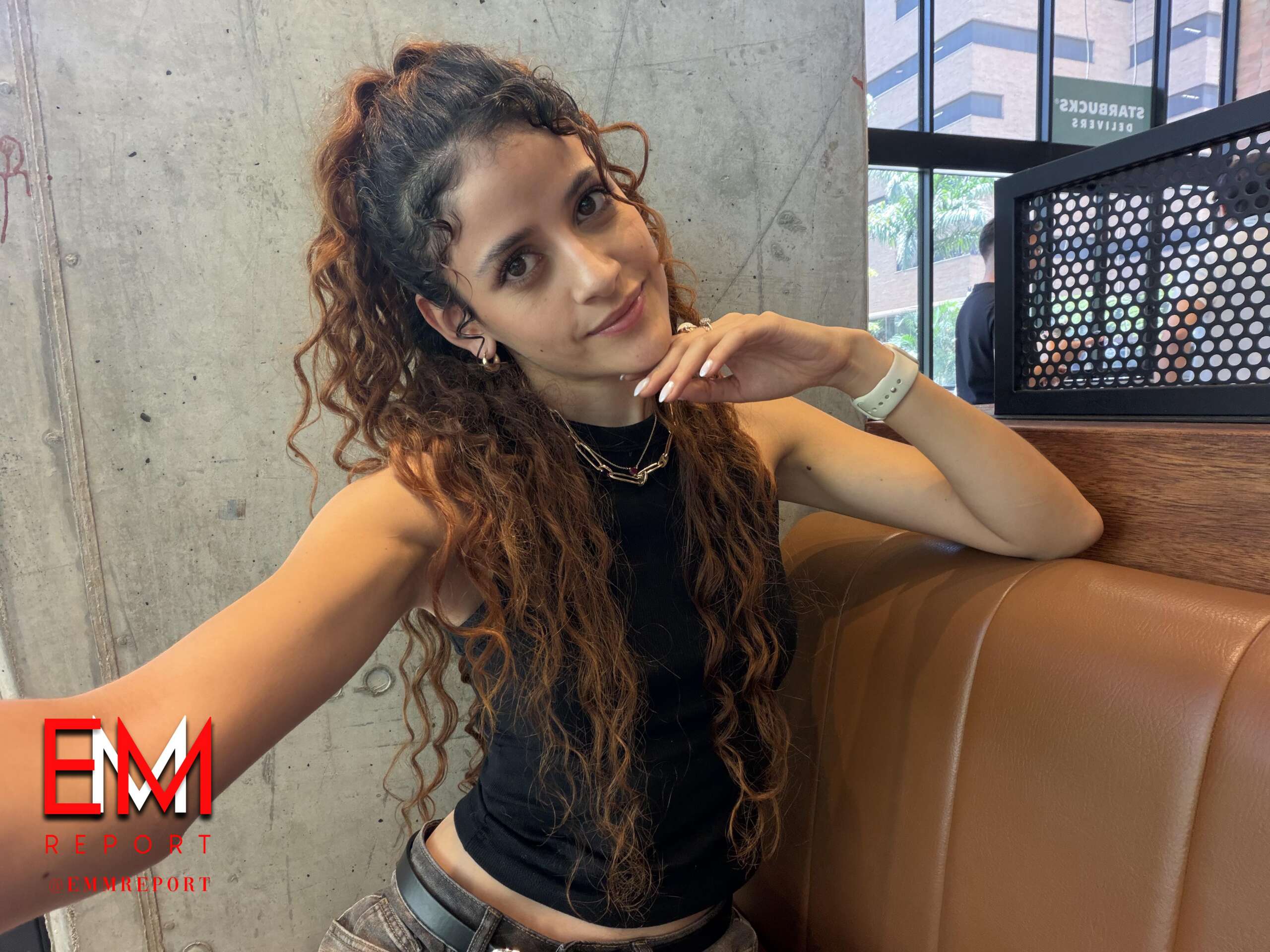
THE ROUNDTABLE
Alana Rey, Sally Dinosaur, Codey Steele and director Jeffrey John Hart describe the trust, boundaries and relentless takes behind the Holly Randall and Stripchat production.
Interview/Feature: Sherman Wayez
CHICAGO, ILL. — The EMMREPORT caught up with Cam Girl stars Alana Rey, Sally Dinosaur ,Codey Steele, and director Jeffrey John Hart, across four cities in Colombia, Cyprus and the United States. From the first pitch to the final take, their separate conversations reveal the ambition, uncertainty and creative choices behind one of the year’s most anticipated projects from Holly Randall and Stripchat. We have brought their perspectives together for a roundtable-style look at how the film was made.
For three performers, the invitation meant three different calculations. Rey had to decide whether a feature could respect limits she had already set. Dinosaur, a self-directed cam creator, had to imagine herself inside a scripted film. Steele already knew Hart’s methods from two earlier movies and wanted to work with him again. Hart, meanwhile, believed the movie’s emotional foundation depended on a lead who had briefly said no.
Rey had met Hart in Bucharest in 2025. She remembers that first professional shoot as an exercise in confidence: “He made me feel really comfortable with myself, with my body.” She felt their working styles matched, but when he approached her about Cam Girl in December, she did not yet know what the project demanded. Her initial yes gave way to uncertainty. She assumed he wanted her for a conventional pornographic film and told him, “I don’t do porn. I just do camming.”
Rey describes the first collaboration in her own terms: “He explained what I should do in front of the camera, so he made me feel really confident. I felt like we matched to work together.”
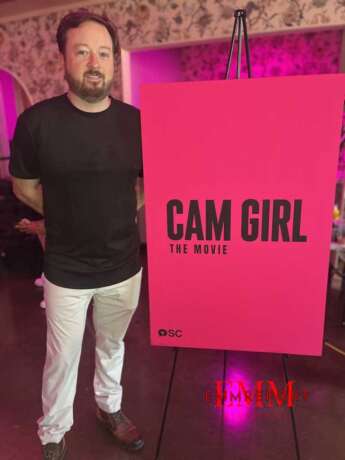
The Yes That Could Change the Script
Hart sent her one of his films and traveled to Colombia to explain the new project face to face. Rey felt the pressure inherent in a visit of that scale, yet she says he made room for refusal: “If you say no, that’s fine. That’s totally okay, and we will remain friends.” Once she understood the story, she wanted in. Hart’s account is more stark. “I’m not doing it without you,” he recalls telling her. “The movie doesn’t work without you.” He says there was a period when he believed the production might not happen at all.
Rey remembers the first refusal as a difficult personal moment. “I was like, ‘Oh my God, how am I going to say no?’” she says of his trip to Colombia. Hart’s reassurance let her judge the film itself: “I did like the project and what it was going to be, so I just couldn’t say no to that.”
The visit let her replace an assumption with a choice. “I could talk to him face to face to know exactly what the project was,” Rey says. “I didn’t have any idea. But yeah, he basically had to come here.” After seeing his earlier work, she remembers thinking, “Wow, this guy is really good, and he has really good ideas.”
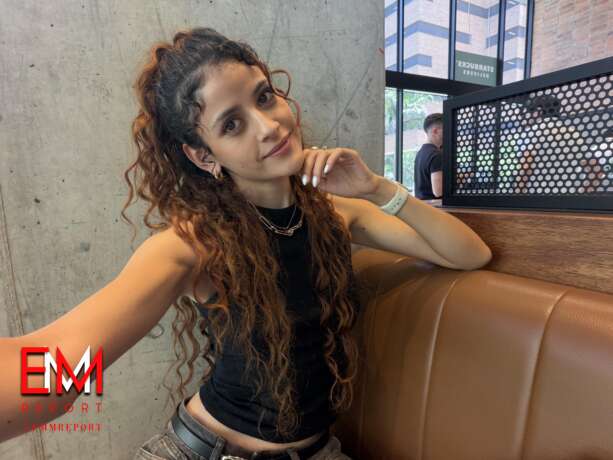
Rey’s condition was specific. The original conception involved a collaboration with another performer, and she did not want to do it. “For me, Alana, I don’t do collabs,” she says. Hart offered to make the scene a solo webcam show. “No, I can change the script. It can be just you,” she recalls him saying. The revision preserved the professional boundary that had governed her own work and gave the fictional character a form of performance Rey knew intimately.
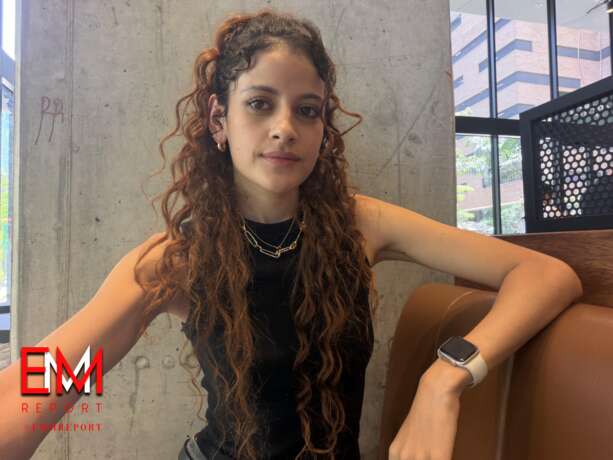
When the proposed collaboration crossed her line, Rey recalls the practical answer that changed everything: “Jeff told me, ‘No, I can change the script. It can be just you.’” She reiterates the rule in her own voice: “I have my boundaries really, really set.”
Hart gives the same principle its bluntest expression: “A model tells you a boundary—that’s it.” He says he briefly stopped moving the film forward after Rey withdrew, then faced substantial changes when she committed. Her participation required the team to reshape plans around travel and work-authorization problems. “As soon as she said yes, I immediately was like, ‘Oh fuck, we actually have to make this thing now,’” he says. The practical pressure did not alter the reason he wanted her. “Her story is the base of the movie.”
Hart says he trusted his casting instinct from the start: “I always trust my gut.” On location, his standard was that viewers had to “believe what she’s going through” and “believe that what you see is real.” Looking back, he says, “Every single day, this girl delivered a performance.”
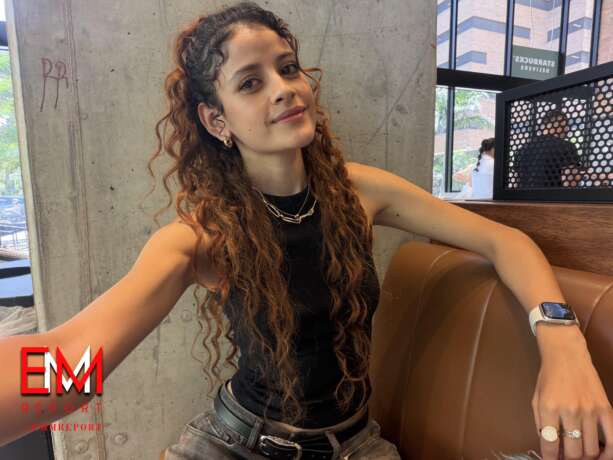
For Rey, the fictional journey reached into her own history. Her character struggles financially and turns to camming while trying to help her grandfather obtain medicine. The production returned her to the Colombian neighborhood where she grew up and where her early webcam shows began. She calls that return “a little bit therapeutic,” and says, “It made me feel so grateful that I could make it out of there.” Hart knew the setting and performance had to hold together: “If there was any crack at all in her performance, at all, the whole thing would fall apart.”

Rey calls the return “a little bit therapeutic.” She explains, “I think that’s why I feel so connected to this movie, because it allowed me to see that neighborhood from some other point of view.”
During her solo scene, the performer’s experience and the character’s inexperience had to coexist. Rey says Hart told her to work as she would on a real show, within her comfort. Hart remembers asking her to pull back when the experienced cam performer threatened to get ahead of the character’s first step. “That’s what you do, that’s not what your character does,” he told her. He cleared the crew and left microphones on stands for a more private set. The exchange captures the production’s central tension: an authentic performer working within a story that could not simply be a record of her ordinary show.
“Jeff let me do whatever I wanted,” Rey says. His instruction, as she recalls it, was: “Do whatever you do on your show, whatever you feel comfortable with. I won’t tell you what to do. Just like if you were doing a real show.” Hart remembers reassuring her before the cameras rolled: “Well, no, you do have a choice.”
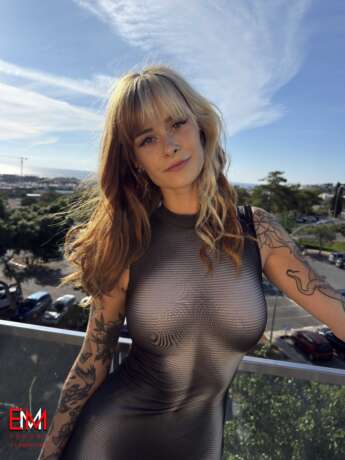
The Camera in Cyprus
Dinosaur came to the project from another angle. Hart had approached her at Venus Berlin, where she had watched footage he shot of her on a large screen and found herself absorbed by the image. Later promotional work in Los Angeles strengthened her trust in his camera. She had made her own material but had not planned a conventional move into studio features. At first she pictured a long intimate scene with a little role play; the eventual screenplay, she says, resembled a regular film with real sex inside it.
Dinosaur remembers watching Hart’s footage of her during their earlier live shoot. “I couldn’t stop watching us,” she says. “Oh, that looks so good. Let’s continue, but I just want to watch it.” Working with him again, she found, “It’s so easy to work with him.”
“It was a completely new thing for me,” Dinosaur says of the feature. “I thought it’s like a long sex scene only, maybe with a little bit of role play.” She describes the result as “just creating like a regular movie, but with like real sex in it.” Her first response to the uncertainty was simple: “Okay, I trust you. Let’s go.”
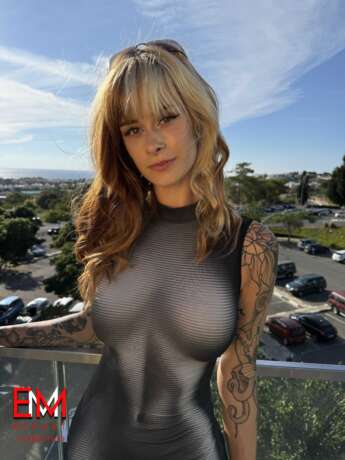
She plays someone named Sally, but the shared name does not erase the difference between actor and character. The fictional Sally’s partying threatens her work and forces a choice about how she will live. Dinosaur recognized fragments of her younger life and her more recent experience of burnout, while insisting that she had never gone to the character’s extremes. One emotional scene followed her home. She cried, called a friend and reminded herself that the despair she had inhabited belonged to the role.
“So I’m playing Sally, but not like the real Sally,” she says. The overlap was nonetheless hard to shake: “I really felt it in that moment.” Later she says, “There are some similarities, but it’s not the same person. Definitely not.”
She also remembers how hard Hart pushed to reach that feeling. In the Cyprus summer heat, he might reconsider a lens or ask for one more take after she believed she had given everything. His “actually, no” became a running refrain. On the last day she cried when the crew persuaded him to accept a difficult shot; she feared he still regarded it as incomplete. He saw the tears and asked for another. Yet she also recalls a sunset scene when he deliberately spoke more softly and an emotional sequence when the crew let her sit apart between takes to preserve her state of mind.
His willingness to follow an idea could send the crew in circles. “He’s like, ‘Oh yeah, let’s try it,’” Dinosaur recalls. After changing the lens and working out the new setup, he might decide, “‘Actually, no, let’s do A all the time.’” She says the phrase became familiar because “he knew he can get the 11 out of 10.”
The effort was personal as well as technical. “Sometimes it was really hard,” Dinosaur says of another take. “I don’t know if I can do it like one more time because I think this was the best part.” She remembers Hart’s promise with a laugh: “It’s definitely not. Give me one more. It’s like, give me five more.”
She describes the emotional cost and the trust in the same breath: “I cried a lot of tears, but I trusted him so bad with that project.” On one take, after she felt emptied out, he asked for more. “He knew it better than I knew it in that situation,” she says. “And I did it, and it was the 11 out of 10 then.”
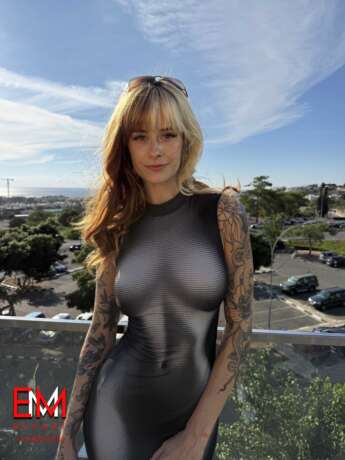
The locations offered an unexpected reward. A week or so of shooting took her to sunset spots around Cyprus, the island she had made home but scarcely explored. Hart’s drone images inspired her to experiment with aerial shots of her own. The small crew felt familiar, and she says the filmed intimate setups—a solo stream and scenes with a woman and a man—worked best when they could establish preferences, take still photographs beforehand and allow the action to continue without constant interruption. She valued Hart’s ability to keep filming without becoming the center of the room.
His direction could also mean restraint. Before one sunset scene, she says, Hart told the team “he will now talk a little bit more quiet because it’s a very emotional scene and he doesn’t want to disturb us.” For Dinosaur, that sensitivity mattered as much as the repeated takes.
The Cyprus shoot changed her view of home. “For the movie, we needed every single sunset place there is,” she says. Looking at the drone footage, she recalls “seeing how beautiful this place is. And I can call it home.” Of the solo filmed sequence, she says, “It was just like how I would live stream.”
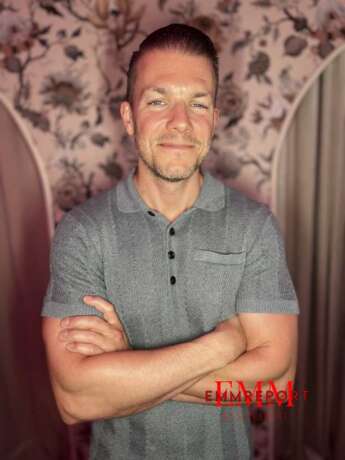
The Actor Who Arrived Ready
Steele’s yes was comparatively uncomplicated. He had made Hopeless and Broken Butterfly with Hart and liked the director’s creative instincts. The team approached him directly, with no agent mediating the offer. Hart supplied portions of the script before filming and remained available for questions. Steele describes a director who asks for an emotion rather than dictating every gesture; Hart might ask an actor to go deeper, leaving the performer to decide how.
“I always enjoyed his creative direction on things and the ideas he comes up with,” Steele says of Hart. “When he came up with or when he was in the process of talking about doing a movie that became CAM Girl, I was on board from day one.” He adds, “I don’t have an agent.”
Hart’s account shows why that latitude matters to him. “Cody is an excellent collaborator,” he says. Steele arrives knowing his lines and ready to suggest a different phrase, movement or pause if it better serves the character. Hart says those choices “make the film stronger in depth and more believable.” He trusts Steele’s physical control of a scene enough to follow an expression rather than mechanically collect coverage. “I’m a face person,” Hart says. When a face reveals the scene, “I’m going right for the face.”
Steele describes a director who leaves room for the actor: “Sometimes he allows you to create the character.” Hart may say, “I want you to go deeper. Like I want you to go to this place with it.” For Steele, the point is that “he’s allowing you to channel that emotion as a person rather than being told what parts of that emotion to channel as an actor.”
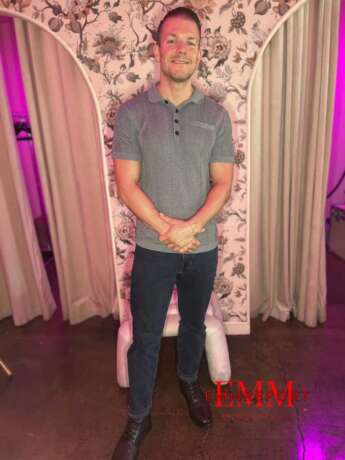
Hart says Steele can respond to a character from within: “I think I would do it like this,” or “I think I would say it like this.” The actor might even suggest, “Maybe I would think about this before I say it.” To Hart, that kind of contribution makes the scene more believable.
Hart remembers that he and Steele have disagreed before. On an earlier shoot, a long day ran into the early morning while Hart kept chasing a particular trailer shot. He acknowledges the strain, but his conclusion about the actor survived it: “He’s Codey fucking Steele, and he’s a brilliant talent, and he delivers.” For Cam Girl, Hart describes Steele as prepared and professional through a roughly 90-minute shoot for a sequence expected to run longer on screen. He wanted the intimacy to remain recognizable as a human relationship rather than a display of technical performance.
Hart’s praise is specific to the partnership: “He knows his lines,” and “we talked through it and then they nail it.” He says Steele can bring a scene to “a really, really, really fucking good boyfriend fuck”—convincing as an intimate moment rather than merely staged for the lens.
Steele says he tries to bring a relaxed professionalism to large sets because a single person’s frustration can spread through a cast. He learns lines readily, accepts changes and likes the variation between acting, romantic material and more physically demanding work. The press conversation so soon after Cam Girl also appealed to him: it gave each participant a chance to speak about the film while the experience was fresh, rather than waiting months for an awards event.
“I definitely have a reputation, I think, in this industry as being someone who’s very relaxed and professional,” Steele says. “Trying to keep it the most relaxed, I guess, chill professionalism, really helps, I think, to make a better product.” On the changing work itself, he says, “I’ve always really liked the variety. That’s what keeps it new to me.”
Hart does not hedge about whom he would call again: “Codey’s definitely, as far as males go, he’s definitely my top male that I would want in every role.” The offer, he says, is straightforward: “If they’ll accept it, it’s theirs.”
The timing of the Cam Girl conversation suited him. A press junket close to filming, Steele says, lets everyone “really talk about our individualized experience on each movie.” It gives them “immediate thoughts right after doing it rather than trying to rehash it from a couple of months ago.”
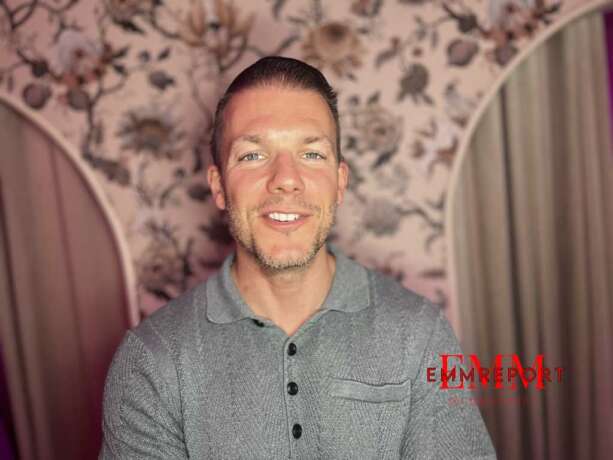
What Four Accounts Reveal
Their accounts do not describe one shared interview or one uniform experience. Rey’s decision turned on a boundary and a return to the place she came from. Dinosaur discovered how difficult it could be to leave a fictional version of herself on set. Steele entered with the confidence of an established collaborator. Hart describes a film he was willing to halt for one performer and a process in which he trusted another to improve what was on the page. The common thread is not agreement about every take. It is the space each needed to make the performance credible.
At the time of their conversations, the performers were still looking toward the finished film. Rey was processing a first experience of this scale. Dinosaur wanted to see the whole edit before deciding how much of its visual language she might adopt. Steele valued being able to speak while the work remained immediate. Hart was already certain what the camera had captured in his lead: “Every single day, this girl delivered a performance.” Four conversations, gathered across three countries, meet there—in the distance between a plan for a movie and the people who made it real.
Would they work with Hart again? Dinosaur gives the clearest answer: she says she would work with the Cam Girl team “again and again and again.” Steele had already returned to Hart after two earlier films and says he was “on board from day one” for this one; Hart, for his part, calls Steele a performer he would want “in every role.” Rey does not make a specific promise about another film, but her account explains why she might consider one: Hart traveled to hear her concerns, respected her refusal and changed the script so she could work within her boundaries. Any next collaboration would begin, as this one did, with the performer’s choice.
SOCIAL / PLATFORM LINKS
Alana Rey: @alana15xv
Sally Dinosaur: @SallyDinosaur
Codey Steele: @CodeyXXXSteele
Jeff John Hart: @jeffjhart
Holly Randall: @hollyrandall
Stripchat: @stripchat

Follow us on twitter: @emmreport, instagram @emmreport, tiktok@emmreport
#Emmreport,#Emmmedia,#Profile,# interview, #celebrity, #exclusive,
#actress, #actor, #model, #influencer,#podcast,#reel,#thought, #love, #beautiful,
#profile, #interview, #discussion,#BTS, #BehindtheScenes,




+ There are no comments
Add yours