
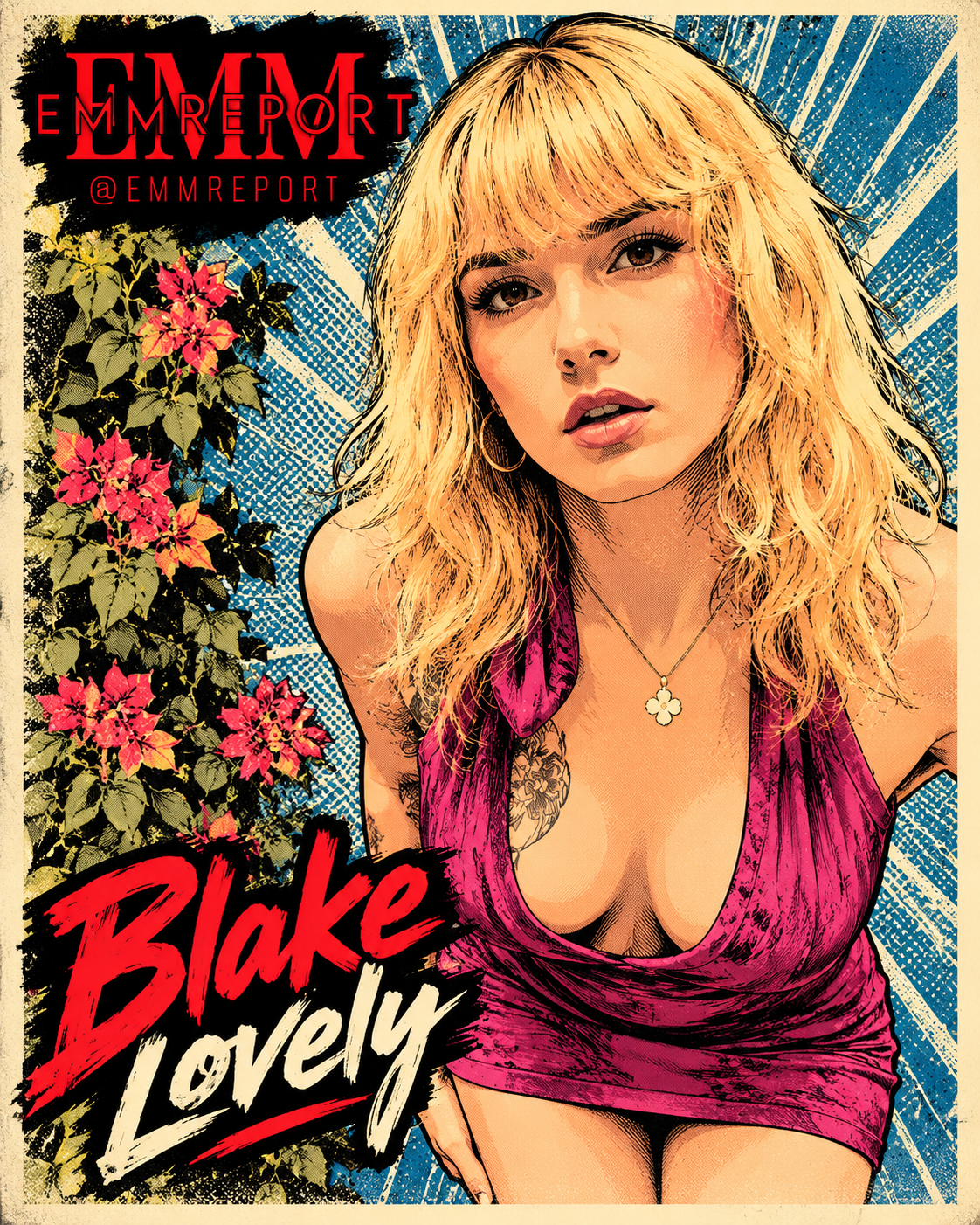
An award for a film she once struggled to imagine making opened new doors in 2026, while the demands of building a career on her own terms became impossible to ignore.
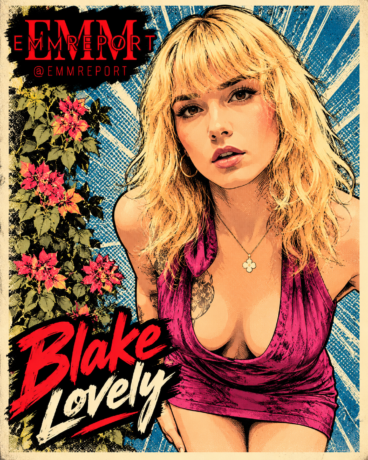
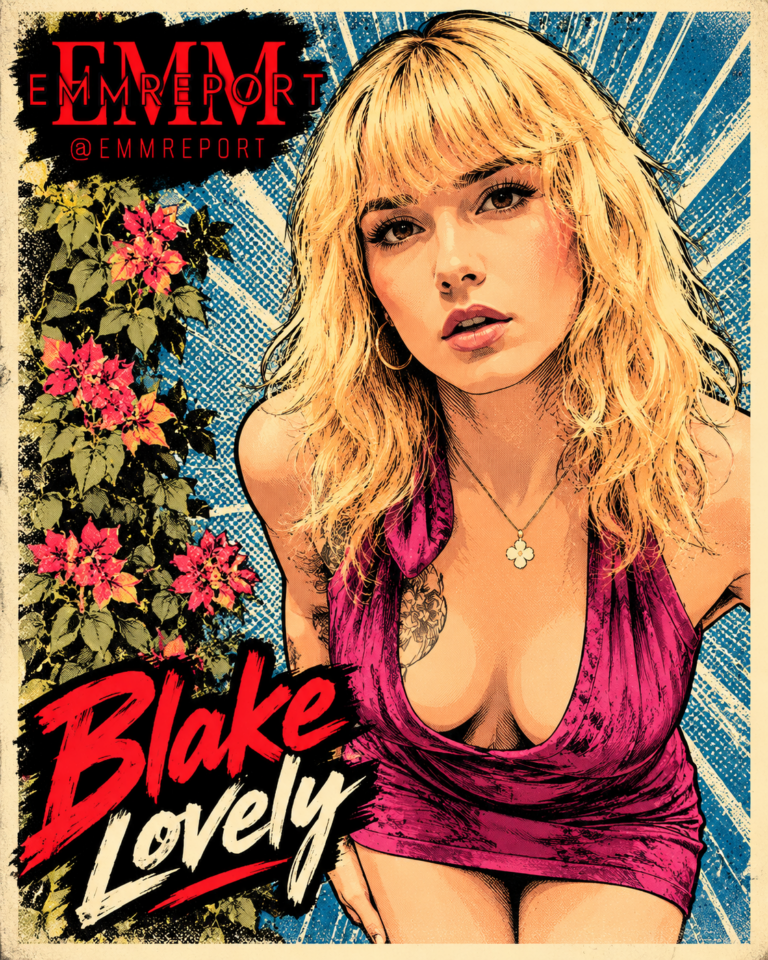
We chose Blake Lovely for our FYC 27: For Your Consideration series because 2026 was the year her persistence, creative ambition and willingness to take control of her own career came together in a way that was impossible to overlook. After years of pushing through rejection and building an audience on her own terms, Lovely entered the year with an award-winning film that placed her not only in front of the camera but at the center of the creative process, earning a TEA Award and changing how the industry viewed her work. From expanding her reach to millions of viewers and developing new projects with friends and collaborators to confronting the relentless demands of maintaining the Blake Lovely persona, her 2026 story became about much more than a single award. It is the story of a performer becoming a filmmaker, a creator learning to own her business, and an artist determined to use her growing visibility to create opportunities for herself and the community around her.
Editor’s Note: The following story is drawn from three separate interviews conducted between January 2025 and September 2026.
Interview/Feature: Sherman Wayez
CHICAGO, ILL.
Blake Lovely can trace the distance between her first conversation with EMMREPORT and this one through a single object: a DVD. The earlier interview found a performer still measuring each opportunity against the rejections that preceded her first major studio scene. By the next conversation, she could hold the finished feature in her hands. In the 2026 lookback, she was discussing what happened after that work won a TEA Award.
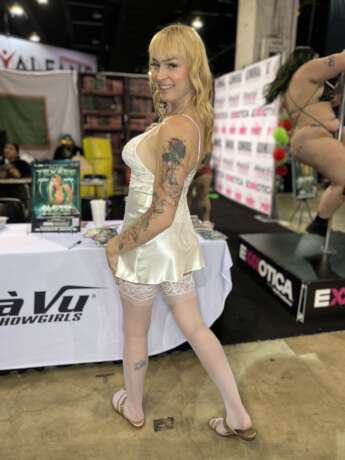
“I won a best DVD at the TEA Awards,” she says in the latest conversation. It mattered especially because she appeared in every scene. “That was actually the only award I won,” she clarifies after initially agreeing with a question that suggested multiple wins. The other nominations mattered, too, but she is careful about the count and about the achievement itself: one win, for a collective piece of work that carried her name.
In the award interview, she recalls freezing at the microphone. “I had a speech prepared, but like all the words went out of my brain.” She had worked opposite people she had admired for years. What she wanted to make was “something truly special that brought everyone together,” and what stunned her most was that the finished film reached them and reached an audience.
That moment is the opening of her 2026 story, but it is not the beginning of her life in performance. The route to it runs through a small town near the Blue Ridge Mountains, a guitar from her father, years of music, a difficult transition, a first scene obtained through a cancellation, and the stubborn habit of trying again after being turned down.
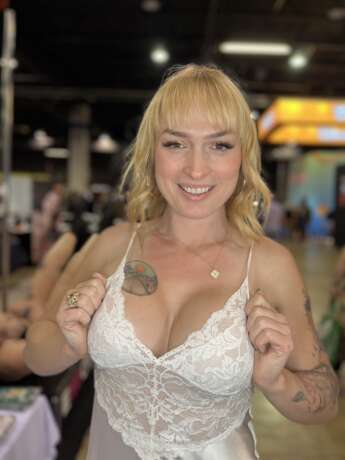
The Guitar Before the Camera
In the first interview, Lovely describes growing up in rural Virginia, feeling conspicuously different from other children and finding a possible way to reach people through music. Her father bought her a guitar when she was 10; by her early teens she was writing songs and playing in bands. “I was drawn to songwriting,” she says, because she had “thoughts and feelings that I couldn’t explain.” A song could reach someone alone with headphones, she believed, when the listener was most open.
She remembers an early talent show with guitars out of tune, an unplugged bass, no useful vocal monitor and a call to her mother to take her home. There was also a more serious turning point: the death of a close friend inspired what she considers her first good song at 16 and the project that followed. “I wrote my first song after my best friend died,” she says. “I started that project in that order.” The band lasted 11 years; she recorded and toured, and later spoke of eventually wanting to bring music back into her life.
The desire to connect was already the through line. “I wanted to connect with as many people as I possibly could,” she says. Fame alone does not explain the years of failed attempts at recordings, or why she kept working through them. The idea that a performance might change how another person sees the world survives intact in her account of the films she makes now.
Becoming Visible
Lovely says she has Klinefelter syndrome, also called XXY syndrome, and recalls being bullied over physical differences in school. She describes years of questions about her identity and a difficult path to transition. The treatment and memory experiences she recounts are her own account; she also speaks about family rejection, trauma and periods of isolation. “I wish I had a fairytale story for you,” she says of the response around her. “Unfortunately that is not what happened.”
She had wanted to work in adult film since she was a young adult, yet the route was hardly immediate. In that first interview she describes early solo content, experiments on OnlyFans, rejections from representatives and the patient work of building a professional look and an audience. “I was rejected seven or eight times before I finally got the chance,” she recalls. “I just kept trying.” A cancellation gave her a first major scene with Ricky Greenwood; later work with other studios brought nominations and wider recognition.
She also describes the help of people she met along the way, including trans women whose careers gave her a different picture of her own possibilities. “They showed me what trans excellence really looks like,” she says in the award conversation. Her first telling of the story is frank about loneliness; the later one returns again and again to a chosen community. Both belong in a portrait of the person who walked onto that first set.
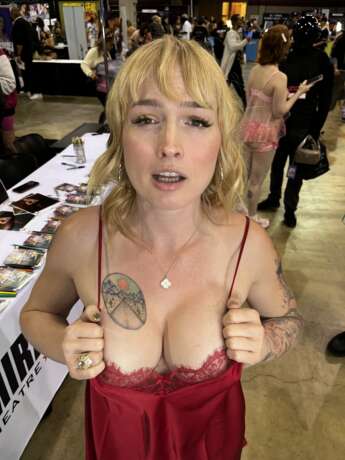
A Film Built by a Village
The feature that won in January grew from an outline Lovely made for five scenes. She wanted a nostalgic, cinematic project, with influences she associated with late 1980s and 1990s films as well as lessons learned on adult sets. Andre wrote the dialogue; Mark and Aiden helped build and execute the production; the cast was chosen for how each performer fit a role. “I came up with the concept and the scenes,” she says in the second interview. “I didn’t write the dialogue.”
Five days of filming, multiple locations and her presence in every scene made directing herself especially difficult. “Unbelievably nervous,” is how she describes the first day. She drew on music video experience and her growing body of on-camera work, while Aiden handled crucial visual decisions when Lovely was performing. The first day fell on her birthday; after the shoot, Foxy took her for sushi. On later days, dialogue coverage, long master shots and repeated takes taught her how much more the film required than a collection of scenes.
She remained exacting through the edit, sending detailed notes on cuts, locations and dialogue. Yet she repeatedly names the people who carried the idea with her. “It took a village,” she says. In the most recent interview, looking back at the award, she insists the film’s reception “was not something that I achieved on my own.” She credits Aiden, Mark, the cast and the men in the production. That is why an award bearing her work could feel, to her, like a win for everyone in it.
The January Win and Its Consequences
At the start of 2026, the nominations surprised her. In the lookback she estimates roughly 12 or 13 across several shows, then adds that more came later; the transcription of individual award names is inconsistent, so the exact breakdown is less reliable than her own clear correction about the single TEA win. “I was really surprised,” she says. More than an honor, it felt “like a dream come true.”
The response changed the terms of her work. “Once you become an award winner, you definitely get treated differently,” she says. “I feel like people took me seriously after that.” Her subscription earnings, she says, quadrupled after the film came out. She became more selective about the quality of material under her name, taking down older collaborations she no longer liked from her own store while allowing other performers to continue selling their work.
Yet the trophy did not settle her self-doubt. She talks about being interviewed alongside long-established directors and thinking about how little time she has spent doing the job. “I have imposter syndrome,” she says; she had felt it even after years in music. In the award conversation, she describes the finished DVD as almost unreal: “I didn’t believe it was me.” In the lookback, she says she intends to remain “just as humble as I’ve always been.”
The Year She Made Room for Friends
Her description of 2026 is not confined to work. She calls the summer “very friend focused,” remembers a trip before the Fourth of July with friends including Avery Lost, Foxy, Leilani and Chanel Chance, and lists fireworks, a beach, Italian dinner and pizza by a pool. “It felt like I was 19 all over again,” she says. “This summer has been kind of about making more nostalgic, fun girl memories.”
That feeling echoes a story from the first conversation. At dinner with people from the industry, she found herself crying because she had felt so little connection with family and old friends. “I found family,” she says. The choice to put friends at the center of new projects is both professional and personal. In the latest interview, she says she made two large features with “my best friends and people I love,” while also acknowledging that one production was delayed and that another plan had just fallen through.
She still describes herself as early in her career, and her ambitions extend to others. In the first conversation, she says, “I’m just not going to wait until I have that kind of power to start doing it,” explaining why she introduces newer performers to people she knows. In 2026, she says she wants to “give back to the wonderful sisters and community around me.” The work she hopes to make is tied to the opportunities she wants to create.
Visibility and the Cost of Being Blake
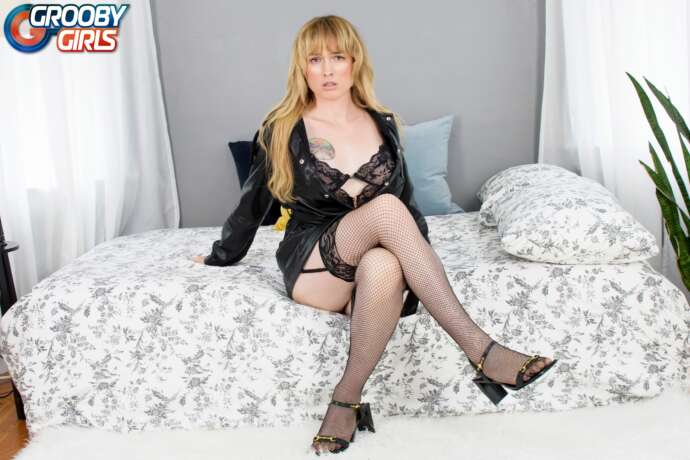
Lovely says short social videos brought her a different kind of attention than the award: more public recognition, and, by her estimate, more than half a billion views across reels in the year. Some viewers accused her of being an AI creation. “AI has got nothing on the real thing,” she replies. She also reports reaching 200,000 followers on X and the top one percent of OnlyFans; those are figures she gives in the interview, not independently verified audience data.
The reach has a price. The first conversation contains an early warning: “I’m Blake Lovely from the moment I wake up till I go to sleep.” She describes tending Instagram, X, OnlyFans and other channels after leaving a set. By the 2026 interview, the pressure has sharpened. “It never stops, you never get a break,” she says of the subscription model. “I’m always Blake.” The audience can know the character at every hour; the person carrying that character gets little time away.
She does not romanticize studio work as a complete answer. She says subscriptions fund her projects and daily life, while studio appearances build recognition. “Studio work will not sustain you,” she argues. She sees power in creators owning and financing films, but also constant availability, oversupply and strain on mental health. Asked if it is possible simply to step away from the persona, she answers, “You have to pay bills, honey. You have to deliver what the fans want.”
The Work Behind the Intimacy
The first interview also spends time on what actually happens on a set. Lovely rejects the idea of a chaotic or careless workplace, describing regular testing, crews, makeup and lighting, and directors she experienced as respectful. “My experience has been very professional,” she says. “It does feel like kind of one big family,” though she adds that families sometimes fight. What surprised her most was “how kind people are on set,” a counterpoint to what she had been told before entering the business.
She is open about sexuality without treating all scenes as interchangeable. She discusses working in both positions on camera, the preparation required for demanding shoots, and how specific partners drew stronger performances from her. “I love sex. I love performing [on] camera,” she says. For her, the distinction between a studio performer and a subscription creator includes being able to work to another director’s standard, collaborate with a partner and adapt to a story. “I forget I’m being filmed,” she says of the moments when the performance feels most natural.
On her own platform, she has made custom material and remembers unusual requests, including a mailed prop and a live video call. She also names types of fetish work she chooses not to do, making clear that a fan’s request does not dictate her limits. In the earlier conversation she describes a boyfriend in the industry but declines to identify him “for our privacy.” Her comments about sex outside work are equally direct: asked in 2026 whether she still enjoys it, she says, “Oh, no, I enjoy it outside of work. For sure.” The candid answers belong to the same person who talks about business, friendship and creative control.
Learning to Own the Business
The first interview follows her from filming short phone videos and editing them in TikTok drafts to learning what subscribers would actually buy. “Some of them would do well, some of them wouldn’t,” she says. She describes moving from the top 15 percent of OnlyFans to the top one percent during her early career. She also warns newer performers about spreading themselves across too many platforms and about assuming a studio scene alone will build a sustainable audience.
Her early manager helped her move from music contacts into adult work and later introduced her to Next Level. At the time she talked about the value of agency access: a seat at events, introductions to directors and a feeling of belonging that trans performers can be denied. “I found family,” she says of a dinner with colleagues. By the award interview she says she is self-booked, still taking some management help from a friend; by the 2026 lookback, the larger question is how she can fund and organize films of her own.
The connection to fans remains personal, not only transactional. She remembers selling through prints at events by talking to the people who approached her. “I listen to everything that they say,” she says in the first conversation. In the second, her message to them is, “We did this together, fans, you and me.” In 2026, as the scale grows, she is still trying to preserve those individual relationships while protecting enough of herself to keep making the work.
The Industry She Sees Changing
Lovely believes adult production is under pressure from age verification laws, the economy, subscription platforms and AI. She estimates studio work is down sharply, but that figure is her observation rather than a documented industry statistic. “I don’t see it changing” back to the old model, she says. Her forecast is for more performer-led productions that hire crews and other performers, including more trans-focused projects.
In her account, the boundaries between a studio performer, a creator and a social personality are moving. “There is a sweet spot,” she says, where experience on other people’s sets strengthens the work someone makes independently. She also sees AI as a possible way to cover exhausting fan chats, while saying plainly, “I don’t use AI for my stuff.” She worries about job losses from it even as she expects the technology to become part of the business.
Her answer is to learn from the directors who hired her and apply those lessons to the audience she has built herself. The ambition has a representational purpose, too. “I am trying to push our genre forward,” she says. About the larger project she pursued after winning, she says she wanted to make something that would keep trans women visible as women to viewers encountering the work alone. Her position is both artistic and commercial: an audience helped finance the earlier film, and the film in turn brought an audience back to her own platform.
The Next Film Is Still in Motion
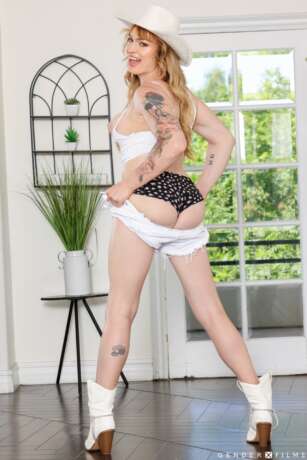
At the time of the latest conversation, Lovely said she had helped produce and appeared in a Grooby horror-themed feature directed by Bakari, Transsexual Horror Stories. She described its trailer as available on Instagram and gave October 15 as its planned release date. She praised the acting and dialogue demands of her scene and called the finished work “magic.” The date is a plan stated before release, not a claim that the film has already premiered.
A separate, larger ensemble project was still being edited or pushed back. Lovely says assembling its cast felt “like assembling the Avengers.” She calls the logistics “ridiculously hard” and says the number of major performers made the production daunting even after scheduling was solved. Elsewhere in the conversation she says another plan had fallen through only days earlier. The transcript does not establish clearly whether every reference to a delay and a cancellation describes the same production, so these projects should not be collapsed into a single completed release.
What remains firm is the scale of her intention. She says she wants another film, more scenes with directors she admires and opportunities with additional studios. She names two first trans productions she says she shot for newer outlets, and speaks of continuing to create on her own terms. “I’m definitely doing one thing a year,” she says of a major producer or director effort, while leaving the exact role open. The year’s most candid balance may be her own: “I’m so grateful to be here,” and, after all the work it took to arrive, “I’m not changing that.”
Follow Blake Lovely on X at @_BlakeLovely_ and Instagram at @blakelovely_. View her exclusive
content at OnlyFans.com/sarablakelovely.

Follow us on twitter: @emmreport, instagram @emmreport, tiktok@emmreport

+ There are no comments
Add yours