Interview/Feature: Sherman Wayez
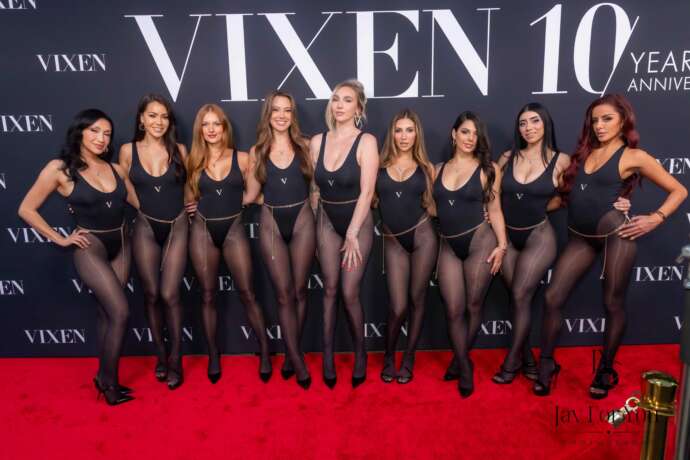
Photo courtesy of VMG/VIXEN
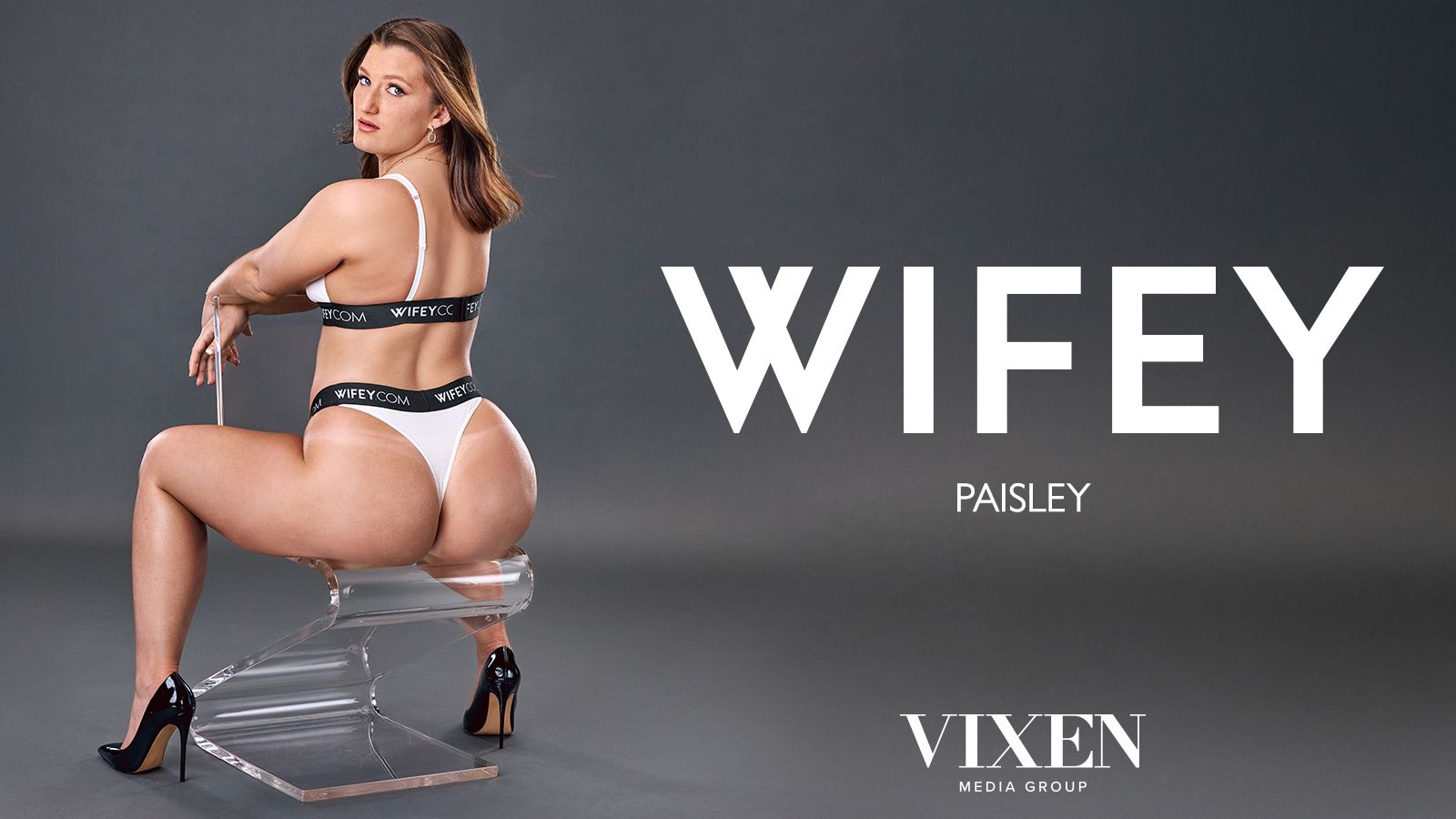
CHICAGO, ILL. — Working with WIFEY was something Paisley West had always dreamed about—and then, almost before she could believe it, the dream became real. She does not need much time to explain her operating philosophy. “I’m here for a good time, not a long time,” she says, the sentence arriving with the certainty of something tested rather than borrowed. For West, hesitation is not protection; it is a way of letting life close before you have tried the door. “If you waste too much time on wondering what if, then you’re gonna die with that what if,” she says. “Whereas you can try it out and it’ll either be a pass or a fail—and you still have time to try it again.”
That appetite for experience sits inside a woman whose life refuses easy categories. West is five-foot-three, a diesel mechanic by trade, a former football player and wrestler, a bisexual woman who once wore a high-and-tight buzz cut, and a self-described “girl next door” whose husband helped her discover the feminine, flirtatious side she had not always recognized in herself. She can talk shop with the guys, do her makeup for a princess moment, and move between both worlds without apologizing for either.
Her appearance in WIFEY began with an ambush of the affectionate kind: her husband filled out the application without telling her. When she was accepted, surprise turned quickly into exhilaration. “It’s like that ten minutes of fame or whatever,” she says. “And I ended up having such a blast with it.” The experience did more than put her in front of a camera. It showed her a possible future. “WIFEY was a big eye-opener for me, to see how far things can go and how big someone can blow up.”
Blowing up, in West’s imagination, is less about a bank balance than recognition. “My name’s out there,” she says. “Like I go into a Walmart and someone asks me, ‘Hey, are you Paisley West?’ I think that’s the coolest thing ever.” It is a wonderfully ordinary image of fame: fluorescent lights, a shopping cart, and a stranger who knows the woman pushing it. She is not chasing distance from everyday life. She wants everyday life to notice her.

THE TOMBOY AND THE PRINCESS
West grew up in Dayton, Ohio, and spent much of her early life closer to the boys than to conventional ideas of femininity. In school she was a jock—football, wrestling, league soccer, school soccer, and brief turns at volleyball and basketball. Math was her favorite subject. The military lived in her imagination from the time she was two or three years old, reinforced by family members who served. She had completed the paperwork and reached the hotel where recruits were to be transported when she chose not to sign. She left to be with the man who became her husband.
That decision redirected more than one ambition. Her husband was a truck driver, and his work sparked her interest in diesel mechanics. West went to trade school and discovered the satisfaction of doing work people did not expect from her. “I like being the manly woman,” she says. “You don’t think this five-three pretty girl can do some of the things that she can do. And I like blowing people’s minds.” In the shop, the reactions split neatly: some men thought a woman doing the work was “the awesomest thing ever”; others resented her presence. West met both responses with the same shop-floor instinct. “You throw some shit at me, I’ma throw it back.”
Confidence, however, was not always automatic. West says she was bullied badly in middle school, in part because of her short hair, her clothes, and the fact that she liked activities coded as masculine. People questioned her gender and mocked the way she moved through the world. She had recognized that she was bisexual around seventh or eighth grade, and her first girlfriend was the girly counterpart to the person West then believed herself to be. “She was the girly girl that I wasn’t,” West says. “I would open the door for her. I would do all the guy things for her. She was my little princess.”
The princess language stayed with her, but eventually West learned to apply it to herself. She credits the past three years of her five-year relationship with bringing out a side that had been dormant beneath the buzz cut and work clothes. “I’ve gotten into the makeup and my flirtatious attitude, and he’s kind of pushed me to realize who I am,” she says of her husband. “I want to do my makeup, make myself feel beautiful, do all those great things.” Her femininity did not replace the mechanic. It gave the mechanic another register.
A MARRIAGE BUILT ON TALKING
West’s husband also introduced her to swinging and the hotwife dynamic. The arrangement appealed to her appetite for attention and to his erotic relationship with jealousy, but the first experience carried more anxiety than swagger. “I was super, super nervous, and I kind of felt guilt about it,” she says. “I feel like I cheated. I did something wrong.” What changed the emotional temperature was what followed: aftercare, time together, and the understanding that the experience belonged inside rules they had chosen together.
“We had to set some boundaries or guidelines,” West says. “I think everybody’s relationship, you have to have that.” Their version of openness is not presented as the absence of commitment. It depends upon communication, approval, and the continuing centrality of their marriage. Her husband is the “stamp of approval,” the person who can speak with a prospective partner and also tell when West’s nerves are blocking something she genuinely wants. “He’s definitely my encourager and my pusher,” she says. “Sometimes my nerves get in the way. It’s like, no way, there ain’t no way. But you have to set that goal and at least try for it. He’s definitely my cheerleader.”
For West, the distinction between sex outside the marriage and intimacy within it is important. Other encounters can be rougher, more adventurous, and centered on play; afterward, she wants the slower connection she shares with her husband. “I like the slow bonding time after,” she says, describing “the sweet aftercare.” The apparent contradiction—jealousy that excites rather than divides them—works because it is spoken aloud. Her husband wants to discuss what happened; West wants him involved in the emotional architecture of it.
Hotwifing also gave West a clearer framework than the broader club scene. In a room full of couples with different agreements, expectations can become difficult to read. “Hotwifing is just me,” she says. “To me, it’s simpler.” The focus helped quiet some of her insecurities. “You get to do you, be you, be pretty and look good while you’re doing it.” The line could sound merely playful, but in West’s story it is also a declaration of ownership.
RAW, UNAPOLOGETIC, AND ON CAMERA
West had long taken photographs of herself before she opened an OnlyFans account. She describes herself as a “picture girly”: before the shower, after the shower, while tanning, after getting her toes done. The account grew from teasing photographs to solo videos and eventually scenes with partners. The progression was not effortless. Posting sex required her to confront the small, merciless questions a camera creates—how her face looked, how she sounded, whether a real moment would appear strange when replayed.
Her answer was not polish but authenticity. “My biggest thing is I hate fakeness,” she says. “I want just pure raw footage.” West believes that candor is what viewers recognize in her. “I’m just one hundred percent unapologetically me all the time,” she says. “I’m the average person, and I’m not fake or hard to talk to or too good for somebody—because I’m not.” Her husband handles post-production, a division of labor she suspects is motivated by both technical interest and arousal.
She wants content creation to become a career, though the reason she returns to most often is attention. West says it without embarrassment: “I call myself an attention whore all the time.” But attention, in her telling, is not a one-way extraction. She likes giving compliments, reading other people’s insecurities, and finding the exact place where encouragement can matter. “Everybody is different in their own way, and you shouldn’t feel weird about it,” she says. With women, especially, that instinct becomes what she calls the princess treatment: affirmation paired with her own dominant personality.
The same impulse shapes how West talks about motherhood and the MILF label. She sees the identity not as a narrowing category but as evidence of endurance. “For women on the MILF side, I think you get torn down so much from having a child,” she says. “You have more insecurities than the average person.” To remain sexual, confident, married, and visibly oneself through those pressures strikes her as a form of power.
THE GIRL NEXT DOOR WANTS TO BE SEEN
WIFEY intensified West’s sense that the life she was building could reach beyond her existing audience. Meeting her scene partner Dan made the scale of the production tangible: “Holy cow, I just did that,” she remembers thinking. His looks, build, and reputation heightened the anticipation, but the larger revelation came from seeing a professional project assemble around her. It converted an idea—maybe she could do this—into an event that had actually happened.
People from her past began discovering the work. Former classmates who knew the diesel-mechanic side of her were surprised; friends from the shop subscribed to her account. West enjoyed the gap between what they assumed and what she had become. “They may have looked at my ass, but they never knew that I was like that,” she says. A message saying someone had seen her on WIFEY put a smirk on her face.
She is equally blunt about what outsiders misunderstand. “A lot of people think of it as a money option,” she says. “They don’t realize that we’re actually enjoying ourselves. I’m actually here because I want to be here. I’m not here because I needed a job.” That insistence on desire and agency runs through nearly every subject she discusses—mechanics, marriage, bisexuality, content, and the lifestyle. If someone does not enjoy being a hotwife, she says, then that person should not be one. If she does enjoy it, she should be able to say so without apology.
West also carries a practical skepticism about the generation she grew up alongside. She thinks phones and social media have made people more afraid of conversation and rejection. Her own standard is simple: walk over, speak, and accept the answer. “There’s not really ever a fail to a conversation,” she says. She would rather someone approach her as a person than stand at a distance and turn beauty into intimidation. “I don’t want anyone to ever be afraid of me. I would much rather us hold a conversation and be able to chitchat about whatever. It doesn’t even have to be about sex.”
TRY IT TWICE
For all her confidence, West does not pretend to have completed every transformation. She is still experimenting, still learning what she wants, and still willing to discover that a fantasy works differently in reality. “There’s tons of things that I haven’t even tried yet,” she says. “I’ll try anything twice.” The second attempt matters because the first can be distorted by nerves, circumstance, or unfamiliarity. It is the mechanic’s version of an erotic philosophy: test, observe, adjust.
That philosophy has already moved her from a bullied tomboy with little self-confidence to the woman whose image appeared on billboards, T-shirts, and beer cans after she won the Queen of Indiana title at a motorcycle rally she had attended for years. She had placed third, returned to compete again, and won. “This year it’s all about me,” she says with delighted disbelief. “Everybody’s there to meet me and say hi, and I think that’s awesome.”
The easy ending would be fame, but West keeps returning to something more intimate: confidence as a thing passed between people. Her final message to fans is not a pitch. It is the same reassurance she tries to offer in clubs, online, and in conversation: “Remember you’re beautiful and you’re handsome, and just think positively.” For a woman who once felt invisible, being seen now appears inseparable from helping somebody else feel visible too.
FOLLOW EMMREPORT
YouTube — http://www.youtube.com/emmmedia
Paisley West — https://x.com/PaisleyWest
Vixen Official Website: https://www.vixen.com/
Vixen Plus YouTube: https://www.youtube.com/@Vixenplus
WIFEY X: https://x.com/wifeyupdates

Follow us on twitter: @emmreport, instagram @emmreport, tiktok@emmreport
#Emmreport,#Emmmedia,#Profile,# interview, #celebrity, #exclusive,