
THE BELIEVER
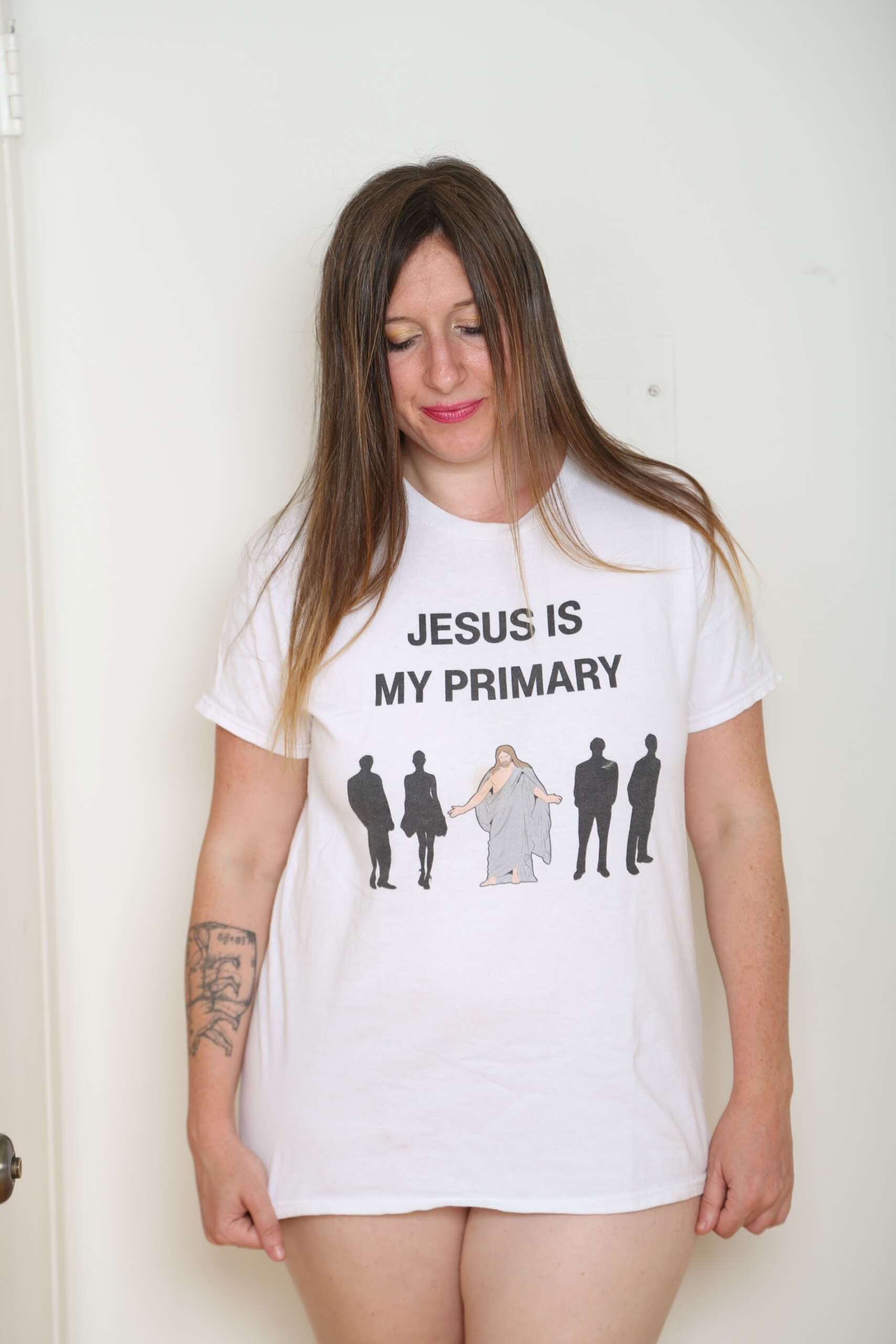
The writer, sex educator, and creator behind Jesus Christ Porn Star is not trying to abandon Christianity. She is trying to recover a Jesus she believes religious authority buried beneath shame—and to build a theology in which women can trust their bodies, pursue pleasure, and speak for themselves.
Interview/Feature: Sherman Wayez
CHICAGO, ILL. —
A Jesus Who Sides With the Judged
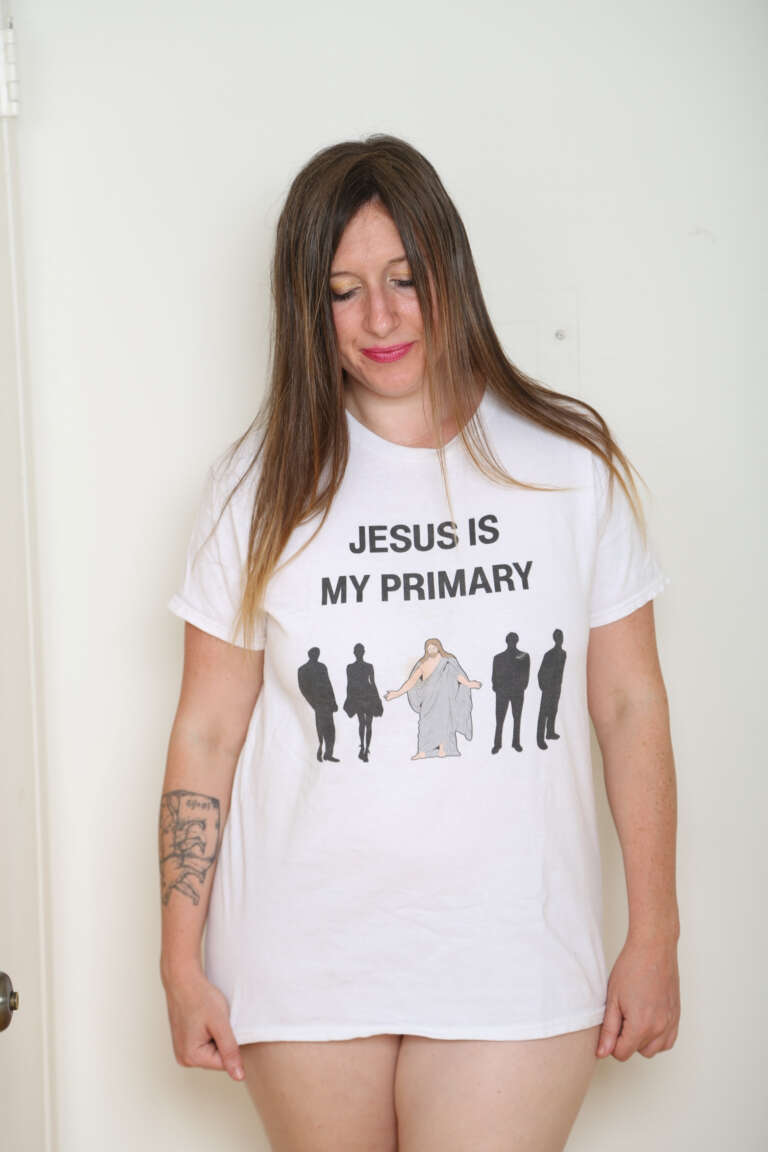
Susannah Weiss begins with a vision of Jesus that does not fit easily inside the institutions that claim him. About a year and a half ago, during a psychedelic journey, she says she received visions and visitations from a sex-positive Jesus—one who was “super cool with sluts, super cool with whores, as long as they’re doing it to please themselves and nobody else.” The experience did not pull her away from faith. It pushed her deeper into the disputed territory between Christianity, sexuality, and women’s freedom, and it supplied the divine spark for a project with a deliberately confrontational name: Jesus Christ Porn Star.
The provocation is only the marquee. Beneath it is Weiss’s sustained attempt to reconcile parts of herself that conventional culture prefers to keep apart: Christian and sex worker, journalist and performer, intellectual and embodied woman. She had already written her latest book, Eve’s Blessing: Uncovering the Lost Pleasure Behind Female Pain, and created a companion OnlyFans page called Uncovering Eve, decorating her body with Bible verses, crosses, and religious iconography while writing about women in scripture. Eve, especially, became a way to examine how an ancient archetype still shapes modern suspicion of women’s bodies.
A later project, The Second Coming, grew from Weiss’s last relationship and shifted her attention toward Jesus and Mary Magdalene. In the Bible, she notes, Mary Magdalene is presented as a follower; outside it, legends have imagined her as wife, lover, sex priestess, or sacred whore. Weiss uses those archetypes to insist on a deceptively simple proposition: “It’s not a bad thing to listen to your body. It’s not a bad thing to pursue pleasure. It’s not a bad thing to love your body, including your sexuality.” To her, that is not rebellion against Jesus. “It really is about being true to yourself,” she says. “I think that’s what Jesus would want.”
Her performances make that theology physical. In her most popular format, which she calls hysterical-literature Bible readings, she reads scripture while sitting on a vibrator, presenting pleasure as a form of religious ecstasy. In other videos, she combines self-pleasure with prayer in an effort to amplify the prayer. She knows the images can make people uncomfortable, but she has also found curiosity where she expected condemnation. Her hope is to open enough space for people to believe they can “love God, love Jesus and love their own bodies” without treating those loves as mutually exclusive.

The Law Written on the Body
Weiss’s argument turns first on the difference between Jesus and the authorities who speak in his name. “Jesus himself did not have much to say on that particular topic,” she says when asked about sex before marriage. What he did do, in her reading, was defend prostitutes—or, in contemporary language, sex workers—and warn against judgment and ostracism. “The real sin is judging people or ostracizing people,” she says, “which I firmly believe.” The familiar prohibition against premarital sex, she argues, rests on passages that are broader and more ambiguous than the modern rule suggests.
She points to language about each woman having a husband, each man having a wife, and keeping the marriage bed undefiled. To Weiss, marriage in the ancient world did not mean what its legal and social machinery means now. If she were revising the Bible for contemporary relationships, she says, she would replace a blanket rule with a demand for emotional intimacy, communication, connection, and informed agreement. “Marriage to me means like a contract, an agreement,” she says. “So, like, what is the agreement? What does this sexual experience mean to both people? What is the nature of our relationship?”
Consent and boundaries are the moral center of that revision. Weiss sees a grotesque imbalance in churches that police how women dress while failing to confront sexual abuse with equal urgency. She is careful when the conversation turns to rape in scripture, saying she does not feel qualified to offer a complete answer without looking it up. What she will say is that the Bible includes rape as both an act of war and an offense, yet contains “nowhere near enough” about it. In her view, that absence reflects a text written largely by men and centered on men. “I think if women wrote it, there would be more emphasis on that,” she says.
Her sexual ethic is direct: “Any form of sex between two consensual people or more than two people is cool.” BDSM, anal sex, monogamy, and relationships outside conventional categories do not become immoral merely because they unsettle somebody else. Religious imagery even appears within BDSM, she notes, and the ritualized punishment of religious upbringing may sometimes be reworked through kink. “The Bible doesn’t teach about BDSM,” she says, “but I almost feel like it’s full of, like, implicit—it’s kind of a kinky document if you really read it.” The punch line carries a serious claim: inherited shame can conceal the complexity already present in scripture.
Weiss ultimately places moral discernment closer to the person than to the pulpit. She invokes the biblical idea that the law will be written on human hearts and imagines the present as a time when people recognize how much religion leaves unresolved. “We need to look to our own hearts and our own bodies,” she says, because morals and laws should attend to what is good for bodies, souls, and communities. Her commandments are plain enough: “Don’t stress people out. That’s really bad for their health. Don’t abuse women. Don’t talk down to women.” Governments and religions, she argues, have failed at basics while claiming authority over intimate life.
That failure is political as well as spiritual. Weiss sees church and state crossing into each other in both directions: “The church has infiltrated the state and the state has infiltrated the church.” Her answer is not to declare the Bible meaningless. It is to deny any institution a monopoly over its meaning—and to ask readers to test religious rules against conscience, consent, bodily knowledge, and the consequences they produce.

Mary Magdalene Beyond the Label
The name Jesus Christ Porn Star originally belonged to Weiss’s former partner. She called herself Mary Magdalene Porn Star. After the relationship ended, the assignment of roles stopped making sense. “I was like, fuck it. I can be Jesus Christ porn star,” she says. She likes the phrase as the next iteration of Jesus Christ Superstar, although she still fantasizes about finding a man willing to join her as part of a Jesus-and-Mary-Magdalene power couple.
Her theory of Jesus and Mary Magdalene is less tabloid romance than mystical intimacy. She imagines them lying apart at night, thinking of each other and transmitting signals energetically. The idea comes from her psychedelic experiences, when she felt Jesus “emitting his light” onto her and experienced full-body orgasms that made her identify with Mary Magdalene. “Maybe they had to be so secretive,” she says. “They, like, did it energetically—but I don’t know.” She marks the line between revelation and historical certainty even while letting imagination cross it.
Weiss has met others who describe themselves, partners, or spouses through the same archetypes. Perhaps, she suggests, the mythology imagines Jesus and Mary Magdalene returning in human form as lovers—possibly through more than one couple. She also distinguishes Mary Magdalene from the prostitute identity later attached to her, an association Weiss attributes to Pope Gregory and a conflation with another biblical character. Yet the factual label matters less to her than the emotional relationship: “I think it was so beyond the label we put on people today.”
A friend supplied the phrase that stays with her: Mary Magdalene as Jesus’s “death doula.” Whether they kissed or confessed romantic feelings is not the decisive question. “I think there was an unspoken, unconditional love between them that just defied labels,” Weiss says. In her hands, Mary Magdalene becomes neither fallen woman nor sanitized saint, but a witness whose closeness to Jesus survives the categories later generations try to impose.

Feminism in the Translation
Weiss’s feminism begins where interpretation becomes power. She believes sex in Jesus’s time may have functioned almost as the equivalent of marriage: without modern contraception and legal structures, taking a sexual partner could mean taking a spouse. The restrictions placed on women then, she argues, were bound to property, paternity, and men’s anxiety about children whose lineage could not be controlled. “Women’s sexuality is difficult to control,” she says. “Childbirth is a process that’s difficult for men to control.” The obsession with virginity becomes, in this reading, not divine reverence but a technology of ownership.
That same controlling impulse persists. Weiss sees attempts in both the Bible and contemporary society to govern women’s sexuality and childbirth “out of men’s fear of not being able to control women,” when the alternative would be trust and partnership. She acknowledges that biblical monogamy appears to have been the norm, while also noting men with multiple wives and suspecting that intimate life was more complicated than the surviving account admits. Ancient categories cannot simply be laid over modern polyamory, monogamy, or queer relationships and expected to explain them.
On homosexuality, she again returns to ambiguity. Lesbian relationships receive little direct attention, she says, while the familiar line about a man lying with another man can be translated and interpreted in multiple ways—possibly as a prohibition against an abominable or coercive act rather than against all male intimacy. She wants sex-positive professionals, pastors, and religious leaders to examine such passages together. A pastor should not end the inquiry with “God doesn’t like that,” she says, but begin one: “Let’s look at the passages and let’s talk about how they’re commonly interpreted.”
For Weiss, the closest reading often requires going behind English translation. She cites the curse on Eve, commonly rendered as sorrow in childbirth, and says the underlying Hebrew term may refer to mental anguish, anxiety, or fear rather than physical pain alone. That opens the passage toward fears of conception, lineage, and motherhood that a narrow translation can erase. “There’s so much it means other than physical pain that we miss,” she says, if readers never return to the original language.
Her Bible does not offer a single flat portrait of women. “Jesus was a women’s rights activist,” she says, describing him as someone who spent time with women and listened to them. Proverbs, in her reading, presents an ideal wife who is assertive, enterprising, financially active, and in command of her household. The Song of Solomon stages an erotic duet between lovers who may not be married. In Subjectified, Weiss writes about its imagery of breasts not simply as objects but as symbols of love, nurture, and independent pleasure—“their own creatures,” as she puts it, “not just here to please others.”
This is the core of her feminism: women are not footnotes to male appetite, male fear, or male authority. Positive depictions have been overlooked, she argues, because “church fathers have pushed one specific agenda.” The answer is not to replace one rigid reading with another, but to let women participate as interpreters of texts, leaders of relationships, and authorities on their own experience. “Nobody else is going to tell you what is right for—what is good for your body and your soul and your heart,” she says.
Making a Church of Her Own
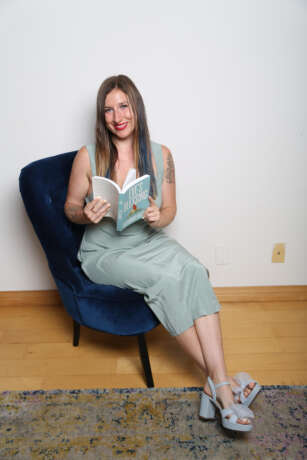
The ideas arrived through a creative practice shaped by illness, plant medicine, and notebooks. Weiss keeps journals close enough to write before bed or after waking in the night. She periodically works with iboga, or a variation called ibogaine, which she says is legal in Mexico and used in the treatment of drug addiction. She uses it in connection with chronic Lyme disease. “When I go on these trips, I get really inspired and I write a lot,” she says. The Jesus Christ Porn Star idea emerged from one of those journeys.
Turning inspiration into public work took months, and the most difficult step was not recording the material but releasing it. Her early videos featured lingerie rather than nudity. After making them in a rush of inspiration, she found herself facing the question she had been circling intellectually: “Whoa, do I actually want porn of myself online?” Time spent at an Ayurveda treatment center, where she could rest and reach a healthier state, helped her post the work. The better she felt about her body, she says, “the less I cared if people would judge me.”
This was not her first experiment. In 2021, while working as a sex educator, Weiss opened an educational OnlyFans featuring lessons and live demonstrations. It succeeded, but a Christian mentor warned her about the energy of strangers looking at her and asked whether she would rather have one man support her than many subscribers paying twenty dollars. Weiss eventually closed the page and spent years asking how Christianity, sex positivity, and her attraction to sex work could coexist.
Her eventual conclusion was to build the bridge herself. “There’s nothing wrong with a woman for celebrating her body,” she says. “What’s wrong is the men who are taking advantage of her.” Creating videos became “like my church”: singing Christian songs, discussing the Bible, and worshiping in a form she chose. “Anything we can do to feel good about our bodies, I think is worth doing,” she says. Then comes the blunt corollary to a theology centered on women’s self-knowledge: “I think men need to shut up.”
That line is aimed at projection—the assumption that a woman performs because she lacks alternatives, that a creator cannot understand her own relationship to her body, or that pleasure invalidates seriousness. Weiss suspects that some people who shame sex workers are unable to imagine sex as enjoyable. “If you are having really great sex, it kind of seems normal,” she says. “Like, you can get paid to orgasm—that’s amazing.” Porn itself is not addressed in the Bible, she notes, leaving believers to confront a modern medium without pretending an ancient text supplies a ready-made rule.

Porn Brought Out of the Shadows
Weiss does not romanticize the adult industry. She describes piracy, low pay, unethical practices, and creators blamed for exploitation they did not design. “You’re exploiting yourself” is the accusation, she says, when the reality is that performers are “doing our best in an exploitative industry.” Her proposed reforms are both economic and cultural: stronger legal protection, rental models that compensate each viewing, and even artistic porn screened in theaters with discussions led by its creators.
Her idea is to make sex public enough to discuss rather than private enough to distort. When porn is watched alone and treated as shameful, she argues, viewers can learn dangerous lessons from performances without seeing negotiation, boundaries, or preparation. She praises feminist and ethical productions that center women’s pleasure and consent, and behind-the-scenes material showing performers planning a scene. “I do think it’s really dangerous for people to get their sex education from tube sites,” she says, connecting that absence of context to men choking women without consent and other violations.
Porn literacy, in her view, belongs inside sex education. “Anything you see in porn is something to have a discussion with your partner about,” she says. Viewers should understand that a depicted fantasy is not blanket permission and that what looks spontaneous may have been negotiated beforehand. She also believes couples would be healthier if they showed each other what they watch. “Then they would understand our kinks and our fetishes and our fantasy,” she says. Shame and secrecy create precisely the silence in which fantasy gets mistaken for consent.
Her own work has moved through many forms. Early professional shoots with director Inka Winter began with Weiss in lingerie, telling stories and reading poetry while using a vibrator. She later recorded direct-to-camera reflections from bed and developed live book-tour performances at sex clubs and play parties, highlighting the words she is speaking at orgasm as a record of the lines to which her body says yes. When someone called her Bible readings a mockery of God, Weiss heard “a male projection.” To her, the act contained “no perversion, no creepiness”—only the simultaneous pleasure of body and mind.
She has also made nonreligious work for Make Love Not Porn, including demonstrations of full-body orgasm and performances in which she narrates fantasies so viewers can follow mentally and physically. The larger ambition is to join writing and performance until the separation between intellectual and erotic work collapses. “My goal is to make porn more intellectual,” she says. She wants to read original passages in lingerie or nude, with a vibrator or without, and to be “that nerdy girl” who can meet an audience intellectually and physically at once.

The Writer Owns the Work
Weiss began working as a journalist in 2015, covering sex, relationships, feminism, and psychedelics. More than a decade later, she has slowed her journalism, published Subjectified and Eve’s Blessing, started a book on sex and psychedelics, and accumulated unfinished manuscripts around Christianity, sex positivity, Jesus, and Mary Magdalene. She now imagines releasing passages first as porn—part artistic experiment, part response to an internet that has destabilized ownership.
That instability is not abstract. Readers tell her they found her books free online before offering to buy a copy. Men send screenshots of pirated videos and announce what they are doing while watching them, yet ignore her request to subscribe. “There’s no respect for our humanity,” she says. “No, you don’t get to just steal from us. If you do, do what you can at least, and don’t rub it in my face.” The theft is financial, but the humiliation is personal: the audience treats access to an image as ownership of the woman inside it.
The cost of production remains invisible to many viewers. Weiss pays filmmakers, locations, costumes, and marketing costs and says she has not broken even on the project. “Please don’t be lazy,” she tells potential supporters. “Please understand this takes effort, so should be compensated.” Direct subscription does more than move money. It can also make the exchange interactive, allowing a creator to know who is viewing and interrupting the one-sided consumption that, in Weiss’s view, trains some men to see sex as something made only for them.
The Woman Outside the Box
If religion supplies one box for women, heterosexual relationships often supply another. Weiss calls it the virgin-whore dichotomy: a woman is either innocent, maternal, and suitable for marriage or dirty, available, and unworthy of commitment. Sex workers encounter it sharply when men are willing to sleep with them but not date them, or assume that public images erase private boundaries. “I really wish they would really get to know us and see our souls,” she says.
Most women, Weiss argues, contain the qualities the dichotomy insists must be separated. “Most women want to be loved and cherished and protected,” she says, and also want the freedom to express “their sexuality and their wild side.” Every relationship must decide how those needs fit together, but a sex worker should not have to prove she is wife or girlfriend material simply because others know what she does. Nor should apparent innocence be treated as evidence that she could not be a sex worker. Both reactions deny the whole person.
At 36, Weiss says she is ready to have children and has turned that readiness into a declaration: “If any man wants to have sex with me, we’re going to be talking about kids or else he can fuck off.” She does not prescribe that choice to women seeking casual sex; she presents it as the boundary appropriate to where she is now. Her broader belief is that relationships improve when women lead, in part because women often have a richer emotional vocabulary and greater willingness to communicate.
Her own relationships have exposed the conflict between desire and shame. One ex helped film her, watched her work, and then condemned it as unbiblical. Weiss believes he may have wanted the life he attacked. “There’s a lot of projection,” she says, “a lot of hatred that men direct toward female sex workers that feels more like a hatred of their own body and their own sexuality.” If people admitted their kinks, porn habits, and moments of feeling perverse, she believes, much of the moral theater would lose its force.
Still, she resists describing every believer caught in that conflict as simply brainwashed. Her former partner came from a religious family and community, and Weiss understands the fear that discarding religious control might also discard something sacred. “There really is something to the Bible, there really is something to Christianity,” she says. “They don’t want to throw the baby out with the bathwater.” That is the dilemma she thinks many people now share: “what to throw out and what to keep.”

A Gospel Still Being Written
Jesus Christ Porn Star is not finished because, as Weiss says, an OnlyFans page is never really finished. She continues to add work, revisit forms, and look for the next iteration. For now, she is concentrating on drawing attention to what already exists. Her two OnlyFans identities are Uncovering Eve and Shoshanna Blanca, her original stage name; she also points people toward Make Love Not Porn, her books, her website, and a Linktree under Shoshana Loves Jesus.
What has surprised her most is not controversy but hypocrisy—especially the men who consume, participate in, or desire her work and then use the Bible to shame her for making it. The project answers them by refusing the forced choice. It keeps the Christianity they assumed belonged to them, the sexuality they wanted to consume in silence, and the female voice they expected to remain apologetic.
Weiss is not offering a finalized denomination. She is staging an argument in public, with scripture on her skin and pleasure inside the act of reading it. Her Jesus stands with the judged; her Mary Magdalene exceeds the labels attached to her; her Eve carries meanings obscured by translation. The connecting belief is that women can interpret, lead, create, desire, set boundaries, own their work, and still approach God without asking permission from men.
That makes the project less a joke at Christianity’s expense than a challenge to people who mistake control for faith. “I actually wanted to do something to bridge the two worlds,” Weiss says. The bridge is unfinished, deliberately exposed, and risky to cross. But on it she has found the proposition that organizes everything else: a woman’s body is not evidence against her soul.






+ There are no comments
Add yours