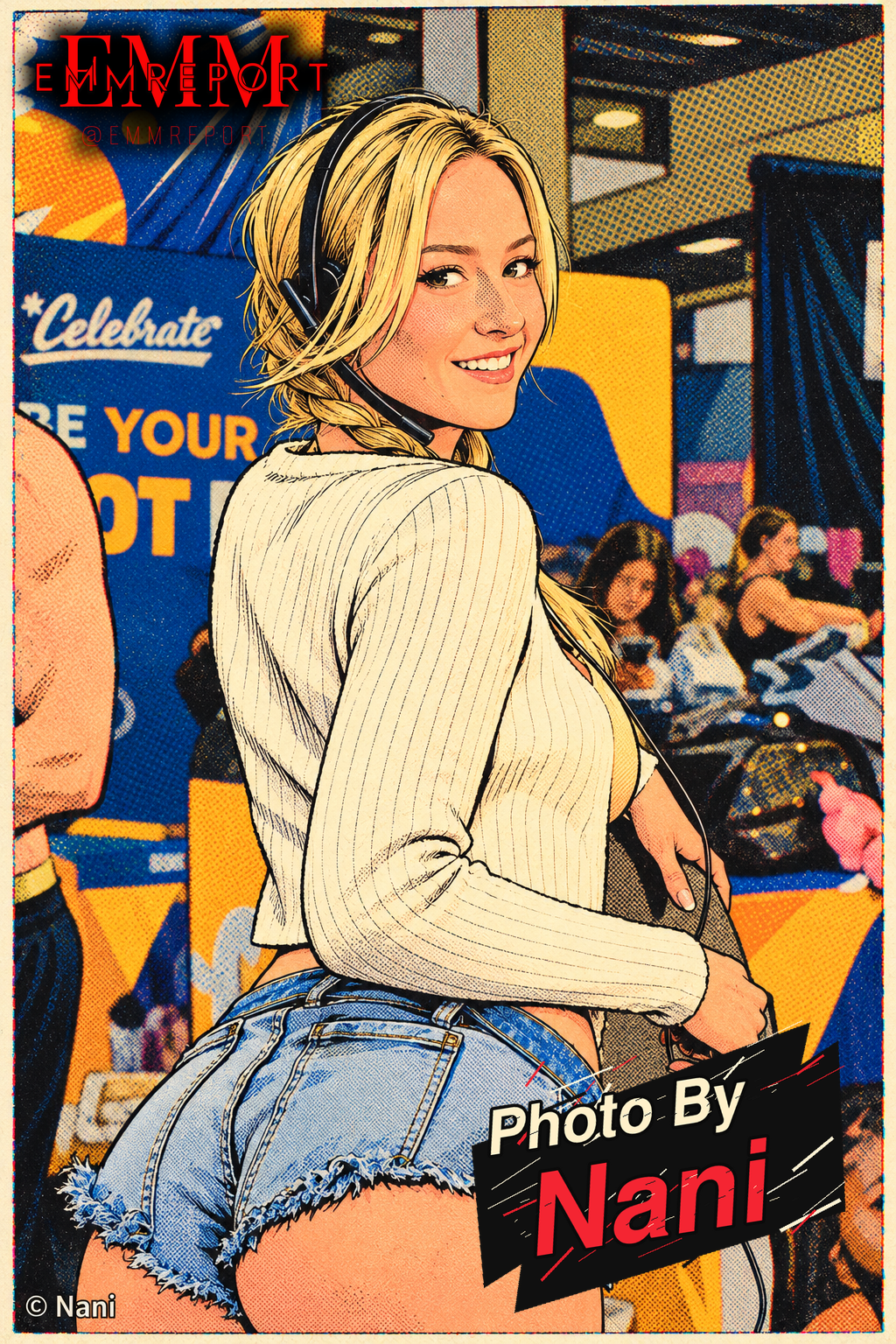
What began with family snapshots and landscape photography became a seven-year journey through children’s events, New York fashion, adult-industry conventions and a first booth of his own at EXXXOTICA New Jersey.
A Booth at the End of an Unplanned Road
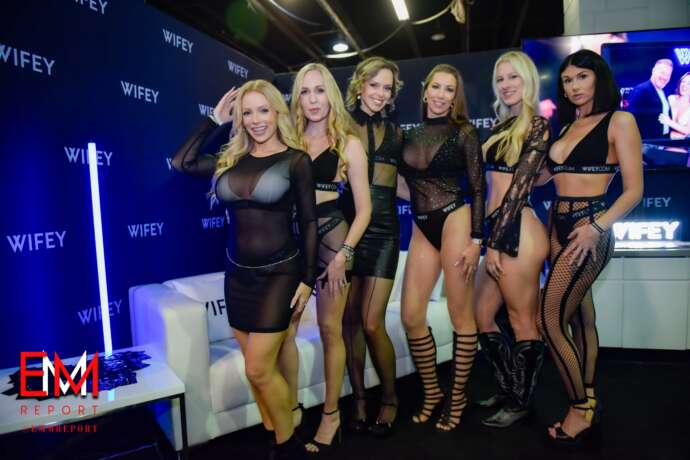
Please STOP by Booth : #1263 at EXXXOTICA and say hello.
Interview/Feature: Sherman Wayez
Photos: Nani
CHICAGO, ILL. — Nani never drew up a career plan that ended with his own booth at EXXXOTICA New Jersey. In fact, he never drew up much of a plan at all. Photography began as something light and personal, grew because people trusted the results, and eventually carried him from family snapshots to fashion runways, red carpets and five years of working the crowded EXXXOTICA floor. Now, for the first time, he will cross from documenting the show to building a space inside it.
“Nothing is planned. It just came organically,” Nani says. Even the booth still feels improbable to him: “I’m setting the booth—that’s a surprise I have in my mind.” Rather than calling it the next rung in a calculated climb, he describes it as another experience he needs to understand from the inside.
“It’s not a progression,” he says. “I want to see the other side of the world. What happens if I put a booth? I want to experience it. It’s like a red-carpet experience.” There is practical work ahead, but the emotional engine remains uncomplicated: “It’s more of that baby excitement. That’s why I want to get a booth.”
That excitement makes more sense when the booth is viewed not as a sudden promotional play, but as the latest turn in a career Nani built by repeatedly entering unfamiliar rooms, learning their rules and finding a way to make himself useful to the people in front of his camera.

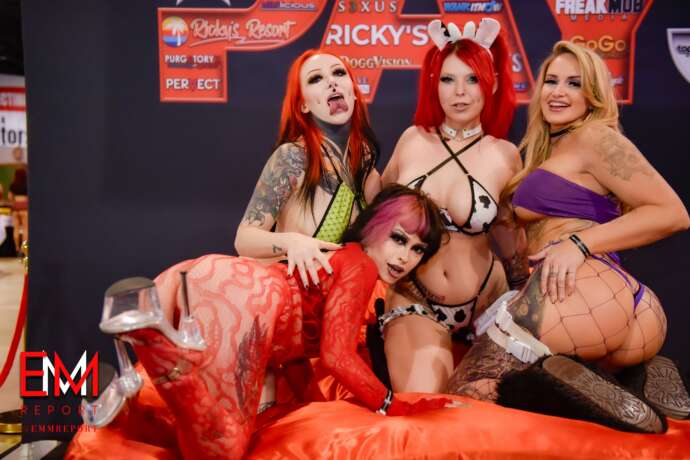
The Family Camera and the American Landscape
Nani traces the beginning back roughly a decade or more, when taking pictures of his parents and cousins was simply a hobby. After moving to the United States about fourteen years ago, he bought a camera and pointed it first toward nature—beaches, forests and landscapes—before people gradually moved to the center of the frame.
“When I started it, it was a very fun kind of thing,” he says. “Definitely there was no goal. There was nothing like, ‘I want to become something like this.’” What survived from those early days was not ambition in the conventional sense, but the private feeling the camera gave him. “Photography has become the reset, where my brain gets reset and it starts functioning very well.”
The first event he officially photographed was for a friend’s daughter. That led to a year or two of birthdays and children’s events—first birthdays, second birthdays, third birthdays and sweet sixteens. “I mostly did the children’s things,” he says. “That innocence is there.” Somewhere in that work, he arrived at the principle that still directs him: “Photography is not about just taking photos. It’s about capturing the moment of that life.”
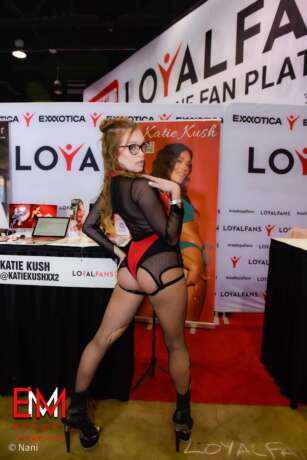
Six Months for the Basics and a Lifetime to Keep Learning
The technical foundation came quickly. Nani estimates that he needed about six months to understand the basics, while emphasizing that the education never stopped. “Even now I’m learning some techniques,” he says. “It’s an ever-learning curve.” He learned heavily through YouTube, then reinforced each lesson by shooting again and again.
His first camera was a Nikon D5100; he later progressed to a Nikon D810 after photographers and event organizers encouraged him to upgrade. “They were saying, ‘You take very good photos. I think it’s time to upgrade,’” he recalls. “Based on my work, I started upgrading myself.” Yet he resists the notion that equipment creates the photographer. “My basics did not change from both cameras. My basics did not change. It was the same.”
That combination—study followed immediately by practice—became his method. Before a beach shoot, for example, he looks at videos, books and sample images, then uses the research to communicate with the model. “That’s where I get inspired,” he says. The goal is not to reproduce another photographer’s image, but to arrive prepared enough to direct his own.

Paying to Learn the Fashion Room
Fashion arrived through an online notice for a model-photography learning event in New Jersey. Nani attended, learned from the organizer and began moving toward fashion events. At first, he paid for access and stood in the press area to learn. Within roughly six months to a year, organizers began onboarding him.
The moment he began considering his work professional came during New York fashion week, when models started using his images as profile photos, banners and display pictures. “My work is getting reliable and professional, and it is useful for models,” he remembers realizing. Their response gave him permission to take his own work more seriously: “That’s where I shifted my work into a little bit more professional way of dealing.”
It took another year and a half to two years before models regularly approached him to collaborate. “I was learning myself and people were reaching slowly,” he says. “I was happy. At least my work is helping someone.” In a week with dozens of runway events, his priority remained the assignment in front of him: the designer’s clothing and the model wearing it. “Your designer work is more important with the model combination,” he explains. A one-on-one shoot reverses that balance; there, the model and her expression become the story.

Natural Light and a Deliberate Conversation
Outside the runway, Nani prefers natural light and the possibilities of outdoor locations. Summer often means beach shoots; winter can mean indoor work, although recent years have brought more experiments in snow, including angel-wing concepts. “When I do outdoor, I can go full on,” he says. The larger environment gives him more room to invent than his familiar indoor setups.
His preparation begins with the model’s comfort level. He studies her existing work, identifies the angles and colors that serve her, and sends a mood board that explains the outfits and images he hopes to create. “I discuss with the model exactly what I want,” he says. During the first portion of a shoot, he lets her work through the poses she knows best. “Then I’ll slowly convert into my story.”
That phrase—his story—does not mean overriding the person in the photograph. Nani’s working rule gives the model control over what reaches public platforms, even when he paid for the shoot or obtained a release. “Even if I pay, even if I get paid, even if it is a collaboration, I’ll take the utmost model approval,” he says. “For me, the model thing is most important.” He owns and archives the images, but the subject’s approval governs their public use.

The First EXXXOTICA Hour
The transition from fashion to adult-industry events was not seamless. Nani bought a three-day VIP pass for his first EXXXOTICA and lasted approximately one hour before leaving. “I was nervous. I was blank,” he remembers. “I didn’t know what I was doing. I didn’t know what I was seeing. I was thinking, ‘What am I doing here?’”
He returned on the second day and began translating the environment into the photographic idea he already understood. “I started slowly digesting what world I am in and started taking the photos the way I do,” he says. “The photo is not just clicking the photo. It’s about capturing that moment for that person.” It took one complete EXXXOTICA for the unfamiliar world to become a place where his instincts could function.
The differences from fashion were immediate, but one discovery surprised him. “Adult-industry people are more respectable than the fashion people,” he says. The fashion background still proved useful: he knew how to observe, how to direct quickly and how to build an image under pressure. At a convention, the window may be only five or ten seconds. “Every model—we need to respect their time,” he says. “They want to give it to fans. They have their own business.”

Consent Before the Frame
Nani’s approach on the convention floor begins with a clear distinction: familiarity is not permission. If he knows the people involved, he may move quickly to preserve a spontaneous scene. If he does not, he asks. “Can I capture the moment?” is the question that comes before the shutter.
“If a model says no to me, whether it is a fashion model or EXXXOTICA model, I will never take a photo of her,” he says. “Never ever take a photo.” Some performers who declined early in his career returned a year or two later after watching his brand grow, but the original no still mattered. “Even by mistake or by a cheat way, I’ll never take it.”
His boundaries extend to private shoots. Nani has photographed nude work and adult content, but he does not pretend expertise where he does not feel it. “I have my boundaries,” he says. “I try to do more of that sexy kind of style.” Asked why he stops short of certain explicit images, he is direct: “I’m not an expert in that photography. There are very good photographers who can capture those poses very well. I’m not good at that—or I’m not comfortable in that.”
Two Thousand Photographs and One Promise to Deliver
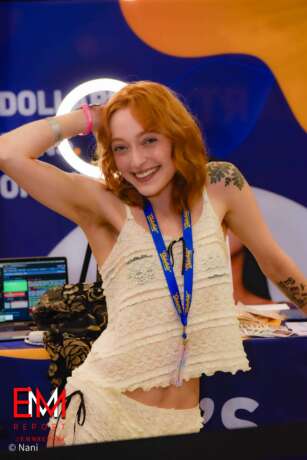
During his first two years covering EXXXOTICA, Nani collected business cards and QR codes from hundreds of performers so he could identify them, tag them and deliver their photographs. Models repeatedly told him that, among the crowds of photographers, he was the one who actually sent the images. He came to regard that follow-through not as an optional courtesy but as part of the assignment.
“As a theory, no,” he says when asked whether an event photographer owes every model a photo. “But if you ask me, it’s my responsibility to send it to the model.” He knows that other photographers follow different rules. His rule is his own: “For me, the EXXXOTICA event is about capturing the moment. It’s my responsibility to send it.”
The volume eventually demanded a technical solution. Drawing on his day job as a software developer, Nani wrote a face-recognition program around an archive that includes approximately 1,400 EXXXOTICA models and 400 AVN subjects. After a day that may produce 2,000 images, he drops the files into a folder; the program sorts recognized faces into individual folders and isolates newcomers for manual identification. The code replaced stacks of business cards, but it also protected the promise behind them.
Editing Lightly and Letting the Camera Do the Work
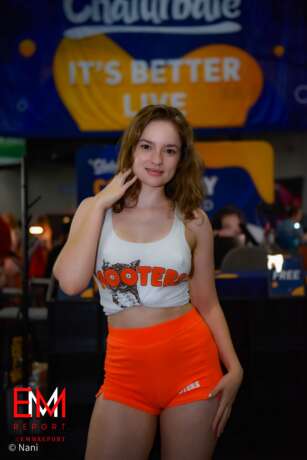
Nani prefers to solve the image in the camera. His post-production is intentionally restrained: a Lightroom preset for the large group of frames made under consistent floor lighting, individual attention for the smaller group made on stages or in difficult light, and touchups instead of radical reconstruction. “Try to capture as much as you can on field, on camera,” he says. “Editing is about basically making it a little bit smooth.”
For convention work, he generally shoots JPEG rather than RAW because the environment and delivery needs do not justify the extra weight. If a flash fails, focus slips or a frame is blurred, he would rather return to the performer and politely ask for another moment. “Ninety percent of the time, I go back to the same model and request to take photos again,” he says.
Artificial intelligence has a narrower place in his workflow. He uses it chiefly to make written communication clearer and more professional, especially when recruiting models or explaining plans. “I use AI heavily there—to put a communication factor in a good way,” he says. He does not use it as a substitute for the subject in front of him. The photograph must still begin with a real person, a real interaction and a moment he was present to see.

Content Sets Without Taking Over the Content
As his adult-industry work expanded, Nani also photographed and filmed content creators in solo, girl-girl, boy-girl and group scenes. He plans camera placement and movement before the scene, explains the visual direction, and invites the performers to correct the plan based on what they know will happen. “I give my 70 percent input and they give their 30 percent input,” he says, noting that the physical direction changes with the performers, scene and location.
Once action begins, however, he avoids interrupting the scene. “I won’t interrupt anything until you say we are done,” he says. Multiple cameras run while he monitors them. The priorities—expressions, explicit coverage or a specific platform’s needs—are discussed before shooting so that he does not destroy the performers’ energy by trying to renegotiate the scene in progress.
He generally leaves video editing to the creator. “Ninety-nine percent of cases, no—I won’t do it,” he says, both because editing is time-consuming and because creators know how they want the finished material shaped. His responsibility is to capture enough strong angles to give them choices. “For me, the client satisfaction is the most important,” he says. “I’ll give the entire things to them, and they can own it.”
Reputation Is Talent Plus Access
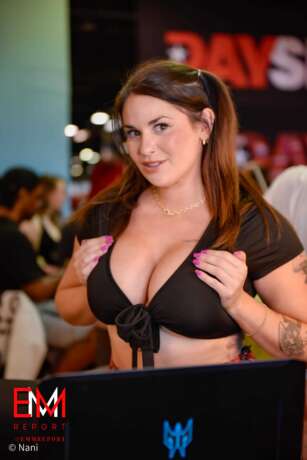
Nani does not separate technical skill from relationships. “Both should be there,” he says. “Even if you have talent, if you don’t know how to network, you cannot improve your brand.” Networking may open a door, but the work must sustain the access: “Your talent is ultimately the base.”
His definition of professional photography is similarly outward-facing. A professional image is not merely sharp, expensive or heavily processed. “Professional photography is something where a client can use those images for their growth,” he says, emphasizing the last point: “Not my growth—their growth.”
For new models, he offers two pieces of advice: show up with accountability, and pursue opportunities rather than waiting for them. “No opportunity will come to her,” he says. “She needs to go sometimes. There is nothing wrong in asking someone, ‘Can you take a photo of mine?’” The worst outcome may be a refusal or an imperfect photograph; the alternative is never entering the room at all.
Five Years Later the Booth Changes the View
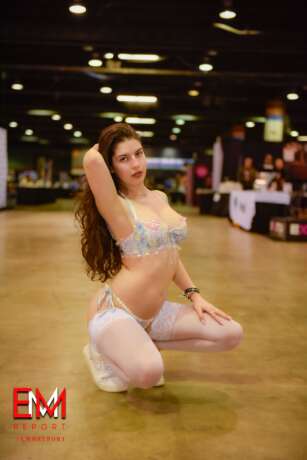
After five years of photographing EXXXOTICA, Nani decided it was time to experience the show from the booth side. The announcement drew responses from roughly forty or fifty models who wanted to participate. His selection principle was not simply reach or celebrity. He wanted the booth to contain the same quality that had sustained his own career: the excitement of someone receiving a first real chance.
Of the approximately fourteen models he expected to involve, about eight were newcomers. “There are a few models who want to get into EXXXOTICA,” he says. “They don’t know what to do, whom to approach, what agencies.” He remembers entering that world without anyone to direct him. “When I was five years back, no one encouraged me or gave me that direction. At least I am in that position to do something like this.”
The remaining places went to more experienced models, including several he approached directly. Their immediate trust mattered. “They told me, without saying anything, yes,” he says. “They did not question me. They did not ask for payment. ‘I’ll come to you because you are a good guy or your brand is good.’” The booth, then, is designed as a bridge: newcomers bring discovery and enthusiasm; veterans bring knowledge, credibility and trust.
A First Team and a Simple Measure of Success
The booth also forces Nani, a self-described independent photographer, into another first: working EXXXOTICA with a team of photographers. “I’m not good in group photography,” he admits. “Even EXXXOTICA or AVN, I go my own way single-handedly.” But one person cannot manage the booth and cover the convention simultaneously, so he is bringing four photographers and thinking carefully about how to divide their strengths rather than point every camera at the same subject.
“This is the first time I’m experiencing the booth experience,” he says. “I’m experiencing working with multiple photographers. This is my first time going to an EXXXOTICA with a new experience.” The repetition in his phrasing reveals the real stakes: he is not selling certainty. He is deliberately placing himself in a situation where he will have to learn again.
His definition of a successful booth has little to do with traffic counts. “If a model who is representing my booth is happy and secure, that’s it,” he says. If she also earns money during her time there, “that’s a bonus.” The first obligation remains “model security, model happiness.” It is the booth-sized version of the rule he established years ago behind the camera.
The Passion That Refuses to Become a Business
Nani still resists turning photography into a conventional business. “Photography is not a business. It’s a hobby and a passion,” he says. He worries that once every decision is tied to money, experimentation and enjoyment begin to shrink. “What you enjoy most will lose with that money commerciality. Innovation also will go with that money point.”
What keeps him returning is the evidence that an image helped someone else. “The satisfaction for us comes based on people’s appreciation and people’s happiness because of you,” he says. “If they’re happy for my photos and for their growth, that’s enough for me.”
That outlook also determines how he understands his own rise. “The success of my journey is because of EXXXOTICA, content creators and the fashion models—not about me,” he says. “Because of content creators who believed my work, I’m in this state.” The booth is not a monument to an individual photographer; in his telling, it is repayment to the community that gave his camera a place to matter.
Where the Next Frame Will Be Made
Nani’s first booth will be part of the upcoming EXXXOTICA show at the New Jersey Convention and Exposition Center, 97 Sunfield Avenue in Edison, New Jersey. The venue telephone number is (732) 417-1400. His photography can be found on Instagram at @nn.creative and through linktr.ee/nn.creative.nj; he also identifies his X account as @nani_clicks and can be reached at naniinnj@gmail.com.
The booth may be the destination promised by the headline, but Nani describes it more honestly as another beginning. “I never set any goals in photography,” he says. “Until I have energy, I’ll do it.” Seven or eight years after the first event work and five years after walking bewildered into EXXXOTICA, he is still following the same instinct: enter the room, learn what it asks of him, respect the person in front of the lens and make the moment useful to someone else.
Nani / NN Creative Instagram: @nn.creative
Nani on X: @nani_clicks
Email: naniinnj@gmail.com
The Exxxotica Expo weekend begins on Friday, October 23 and for more information got to www.exxxoticaexpo.com and you may follow Exxxotica on X at https://x.com/home on Instagram at https://www.instagram.com/

Follow us on twitter: @emmreport, instagram @emmreport, tiktok@emmreport